Transcript
00.00 - 00.21 [Zoe Cunningham]
Hello, and welcome to The Digital Lighthouse, where we get inspiration from tech leaders to help us navigate the exciting and ever-evolving world of digital transformation. I'm Zoe Cunningham. We believe that meaningful conversations can illuminate the path forward, helping us harness the power of technology for innovation, scalability, and sustainability.
00.21 - 00.51 [Zoe Cunningham]
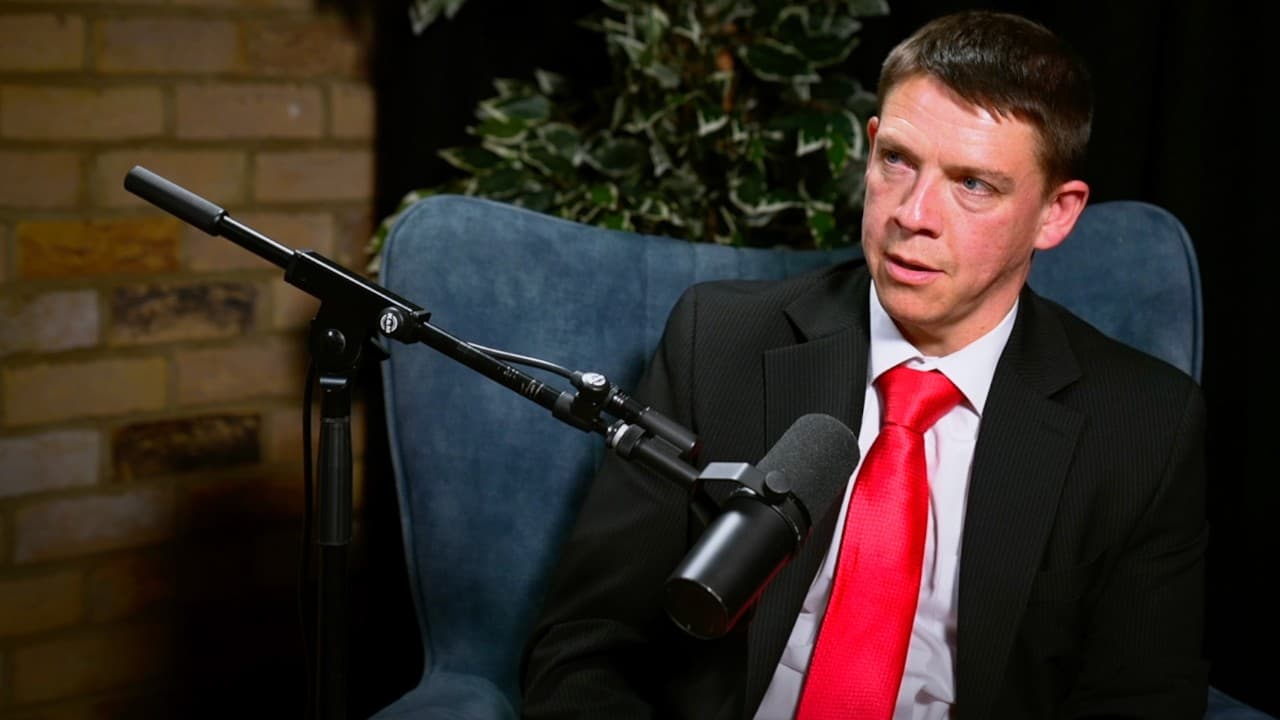
In this episode, I'm delighted to introduce Austen Robilliard, the Interim Chief Executive at IWP Investment Management, where he is responsible for the development of the group's central investment proposition, as well as the management of the internal portfolios. Austen has 20 years industry experience, most of which has been spent as a fund selector. He's known as “The Fund Geek” and has won three European titles along the way, making him the most decorated fund selector on the continent.
00.51 - 01.13 [Zoe Cunningham]
In this episode, we'll be exploring how to set technical strategy in a market that's underserved by technology companies, and how we can utilize whatever tech is available to make our businesses more efficient, functional, and dynamic, even when the big players are not focused on building the systems that we need. Austen, welcome to The Digital Lighthouse.
01.13 - 01.18 [Austen Robilliard]
Thank you for having me. It's my first podcast, and I'm excited and also a little bit nervous to be here.
01.18 - 01.26 [Zoe Cunningham]
[laughs] Well, let's start with you and your background. So can you tell me a bit about the journey you've been on to get to where you are today?
01.26 - 01.33 [Austen Robilliard]
Sure. So I've been in the wealth management industry for 20 years. I actually joined as a PA's PA all those years ago-
01.33 - 01.34 [Zoe Cunningham]
Okay, great
01.34 - 01.46 [Austen Robilliard]
... which is quite funny. Yeah, I spent 18 months to the day at that company. Then I moved across to a company called Murdoch Asset Management in July 2007 as a trainee analyst. So it was my first-
01.46 - 01.46 [Zoe Cunningham]
Amazing
01.46 - 01.53 [Austen Robilliard]
... investment gig, which was wonderful timing because the global financial crisis or credit crunch was just about to hit.
01.53 - 01.53 [Zoe Cunningham]
Yeah.
01.53 - 02.36 [Austen Robilliard]
And it was complete carnage and pandemonium. Somehow, we survived. We get through that. I took over the internal portfolios. I then took on the investment team, so became head of investments about 10 years ago for that organisation. We were then acquired by IWP, who are a consolidator in the UK wealth management market. And I moved centrally to them a couple of years ago. One thing led to another, and right place, right time, and they offered me the position of the interim chief exec of the IM business, which is a role I still do today. And it was, yeah, you go in 20 years, I've gone from a PA's PA to here I am, and you've actually invited me onto your podcast. I must be doing something right. [chuckles]
02.36 - 02.52 [Zoe Cunningham]
No, it's fantastic. And it's always great to hear these stories when hard work pays off, and where you see these kind of cumulative skills, because I think that's what everyone finds in their career, right? That it's learning the skills you need at this level, but then you build on those at the next level, and so on.
02.52 - 03.01 [Austen Robilliard]
Oh, completely. Hard work beats talent when talent doesn't work hard. But you're absolutely right about those foundations. It's no different than if you're building a skyscraper.
03.01 - 03.01 [Zoe Cunningham]
Mm.
03.01 - 03.11 [Austen Robilliard]
You can't build the 100th floor without building really strong foundations on every level below it. And sometimes it's very easy to get lost that what you're doing matters-
03.11 - 03.11 [Zoe Cunningham]
Yeah
03.11 - 03.26 [Austen Robilliard]
... in the long run. You might go, "I've lost a little bit of heart." We get a bit discouraged. But by continuing learning and continuing to adapt, you are actually building something for the future that you may not realise you need, but without those foundations, it's all going to collapse.
03.26 - 03.58 [Zoe Cunningham]
Yeah. That's very smart advice. So your background is in investment management, kind of as a practitioner. But now, with your current role, you've kind of moved into a broader set of responsibilities, which obviously now encompasses technology and kind of having this ownership of the technology that your firms use, that your analysts are using. So tell me a bit about what tech means to you in your role.
03.58 - 04.21 [Austen Robilliard]
Sure. But you're right. So I'm still very much an investment manager or investment geek at heart. But, yes, my lanes of coverage have expanded from investment to incorporate technology, regulation, compliance, marketing, finance, HR, et cetera. So it's been a wonderful learning curve, but we can't get away from technology.
04.22 - 04.44 [Austen Robilliard]
And even just to do the day-to-day job of the investment management, to give an indication, so I'm actually what's called a fund selector. For those of you who don't know, don't worry about looking it up. It's not that important, really. But just in the UK, I've got 3,200 funds that I could choose from, and the idea that we could analyze every single one of those and understand in depth, it's just too much work. Even if I had-
04.44 - 04.45 [Zoe Cunningham]
Yeah
04.45 - 05.17 [Austen Robilliard]
... a team of 100 people, you couldn't do it. So you need technology in order to filter out or, another way, to just narrow down your areas of focus where you are going to invest the time and the effort to do the enhanced due diligence. So technology just in that is important. As well as when we look at from a business perspective, actually, what is it we're trying to achieve? Again, you can't do without technology. Just information that we have on clients or data that we need to do or meet our regulatory requirements. If you're trying to do it with pen and paper and without using even just a computer, it's absolutely impossible.
05.17 - 05.17 [Zoe Cunningham]
Yeah.
05.17 - 05.33 [Austen Robilliard]
And then the demands of what our clients would expect or what any member of society would expect from their company, every shop needs to have an online presence. If you don't exist in the digital world, you don't exist at all. Whereas you go back 25 years, that wasn't the case.
05.33 - 05.39 [Zoe Cunningham]
It must be an industry that's changed so much over the last 25 years.
05.39 - 05.45 [Austen Robilliard]
It has. Probably the biggest change from a-- Again, I've been in it for 20 years, so I can't quite talk-
05.45 - 05.45 [Zoe Cunningham]
Yeah. [laughs]
05.45 - 05.49 [Austen Robilliard]
... about that full time. But certainly, the regulation is something that we've noticed more.
05.49 - 05.49 [Zoe Cunningham]
Mm.
05.49 - 05.55 [Austen Robilliard]
And to be fair, it's made it better In terms of the horror stories don't exist.
05.55 - 05.55 [Zoe Cunningham]
Yeah.
05.55 - 06.28 [Austen Robilliard]
So go back a generation or two, and it really was a wild west. You'd be hearing about people being put into products that were not suitable and not right because of a vested interest or conflict of interest by the person who was supposedly giving them that advice. But certainly, the vast, vast majority of it has been tidied up, and that's down to the regulator. So, credit where credit's due. But just in terms of technology that's around, and let's take Moore's law as an example. The power of the computer that you use day to day compared to 10 years ago, it's 32 times more powerful.
06.28 - 06.29 [Zoe Cunningham]
Mm.
06.29 - 06.53 [Austen Robilliard]
If you go back 20 years, it's now astronomical when you actually look at the capability that you can do, and therefore, the modeling, the tools that you can run are just so much more sophisticated than ever. And that's in a relatively short space of time. And then if you try and extrapolate that in, say, 10 years' time, and you think if computers are going to be 32 times more powerful in 10 years' time than they are today... wow!
06.53 - 07.27 [Zoe Cunningham]
Right. And it kind of goes hand in hand, doesn't it? Because technology is facilitating the changes. It's like we've got these changes in regulation that, like you say, are a great thing but do entail more work. You've got more funds and more options, which is obviously great, but do entail more work, and it's like you both can't achieve that and operate in that environment without technology. But technology's also driving that because that's being able to support other businesses to operate more effectively and offer more choice, and so it kind of goes hand in hand.
07.27 - 07.53 [Austen Robilliard]
Completely. Technology is a tool. So it shouldn't be the be-all-and-end-all of what you're trying to do fundamentally. Fundamentals haven't changed. But how you use tools in order to be better at delivering the outcomes absolutely has. And say, every year there's something new that's available potentially that is worth looking at, and it might be able to allow you to do things that you've always wanted to or dreamt of doing but didn't know how to actually approach it.
07.53 - 08.09 [Zoe Cunningham]
Yeah. Okay. All right. So tell me a bit about, first, I guess, what are the options you have for... if you're setting out your tech strategy, what are the areas you're considering? How do you break it down and think about it?
08.09 - 08.50 [Austen Robilliard]
Sure. So if I look at what-- So say I'm on the investment management side of a financial planning business. So if I look at it through that lens, there's an advice process we have to follow. If you think of the straight-through or start to end, so you have to understand who your clients are. So that's first and foremost. We have to get information of clients. We have to try and work out what they're holding at the moment. Do they have a need of financial planning? Then if they do, and then what's the next step? So we need to assess somebody's risk profile. We then need to demonstrate that the recommendations that we're offering are suitable for clients with that given risk profile or capacity for loss. So how do you then measure that? Well, the better tech-
08.50 - 08.50 [Zoe Cunningham]
Yeah. [laughs]
08.50 - 09.35 [Austen Robilliard]
... enables you to do that more, or hopefully more accurately or certainly more consistently. So that's one of the recent regulations to come out is consumer duty, and that's really changing the landscape because it's almost forcing more consistency and more firms. Whereas before, we're not saying that what was happening wasn't right or suitable or fair, but you might find that you may get variances in regions or different client experiences depending on who they've gone through. So to try and bring a little bit more order to that, and again, you just need your tech in order to enable that because if you're not able to do it en masse and consistently, I mean, we've got 27,000 clients. I would hate to try and do that without some kind of system or process.
09.35 - 09.46 [Zoe Cunningham]
It's also about being able to show to other people that it's been done well and consistently and properly. It's not just doing it well. It's actually allowing the governance of it as well.
09.46 - 10.11 [Austen Robilliard]
Completely. So we're not operating in a vacuum. And there'll be a lot of other financial planners who would also have third-party companies to do file reviews. The regulator as well would be doing reviews. So if you are not giving demonstrably suitable advice, you will be caught. And the repercussions are significant. So there are no corners that you can cut.
10.11 - 10.11 [Zoe Cunningham]
Nowhere to hide.
10.11 - 10.12 [Austen Robilliard]
Nowhere to hide.
10.12 - 10.12 [Zoe Cunningham]
[laughs]
10.12 - 10.18 [Austen Robilliard]
And again, coming back to it, because the FCA or previous innovation, FSA, they've really tidied up-
10.19 - 10.20 [Zoe Cunningham]
Yeah
10.20 - 10.39 [Austen Robilliard]
... the world that we operate within. Yes, you could argue that it's over-regulated, but that's a topic for another day. But when you look at it, they've been focusing on harm and how can it go wrong and how can consumers be hurt? And actually, there are a lot of ways. So they've really been focusing on tidying that up and so you can't hide if you're not doing a good job.
10.39 - 10.55 [Zoe Cunningham]
Okay. So we need tech. We can't do the job without tech. Tech is supporting the industry, but what are the kind of challenges that you find on a day-to-day basis when you're looking at technology implementation?
10.55 - 11.09 [Austen Robilliard]
So being in the retail wealth management area, we really are low down in the food chain compared to when you look at the investment banks of the world or hedge funds or more of the sexier parts, so to speak.
11.09 - 11.10 [Zoe Cunningham]
Yeah.
11.10 - 11.14 [Austen Robilliard]
Which then means that the off-the-shelf products, they're not new.
11.14 - 11.15 [Zoe Cunningham]
Mm.
11.15 - 11.32 [Austen Robilliard]
They've been around for decades, which is great in some respects because you know them, you trust them, you know how to use them. But... well, they're old. The infrastructure, the architecture that's there is, if you were starting a blank sheet of paper, you wouldn't build what is there today.
11.32 - 11.32 [Zoe Cunningham]
Yeah.
11.32 - 11.37 [Austen Robilliard]
But the problem that you have with the blank sheet of paper test is, well, what if it doesn't work?
11.37 - 11.37 [Zoe Cunningham]
Yeah.
11.37 - 11.54 [Austen Robilliard]
You can't really afford, well, we definitely can't afford for it not to work. So the idea of moving away from what you have to something that could theoretically be better, but you don't know, and whereas at least you know what you've got works. So that's probably where I would say the biggest friction is.
11.54 - 12.58 [Zoe Cunningham]
It's really interesting, isn't it? Because FinTech certainly gets a lot of press, right? So, like you say, in the kind of shiny end of FinTech, right? It's one of the biggest, particularly in the UK, one of the biggest growing tech sectors, and that's even trickled down to consumers. So for me, as a consumer, the kind of creation of challenger banks, and not just the fact that I can choose to bank with a challenger bank and get better technology services, it's the fact that the existence of those have really forced other legacy banks who were really very slow to offer the kind of tech that we were getting in taxi apps, but not from our banks. It's kind of forced them to up their game. I can see how it's really tough if there aren't people coming into the market with shiny new products, you kind of don't have much choice about... it's kind of something you can't fix on your own, I guess.
12.58 - 13.00 [Austen Robilliard]
Completely. Which is why I've come onto your podcast.
13.00 - 13.01 [Zoe Cunningham]
Yeah. [chuckles]
13.01 - 13.16 [Austen Robilliard]
To put an advert out. Please somebody build something that I can look at. But when you look at the requirements, we've got client data. I mentioned 27,000 clients at our company, and the information that we have in order to meet our regulatory requirement is considerable.
13.16 - 13.16 [Zoe Cunningham]
Yeah.
13.16 - 13.41 [Austen Robilliard]
And the idea that that becomes at risk, or you're moving it, or you lose it in some IT migration that disappears into the ether, that's actually really scary. And we have to be cognizant, and not just because of GDPR or what might happen, just... people trust us. They trust us with their money, and therefore they expect to trust us with their data. And if we don't deliver, we've broken that bond.
13.41 - 13.42 [Zoe Cunningham]
Yeah.
13.42 - 14.20 [Austen Robilliard]
I'd love to have new shiny toys to be able to look at and play with, and I'm sure it will change, but we're probably looking at maybe even a multi-decade pipe dream. But where we are right now is, you need stuff that is, I guess, lower risk in some respects. Yes, it would be nice to be able to try and move from something that's old and archaic to something that's got a lot more functionality to it, but we are sort of a little bit hamstrung in what we can actually do or try and deliver, or are there sandbox modes that we can play within? And again, you're actually quite limited in your ability to even try it.
14.20 - 15.08 [Zoe Cunningham]
Yeah. It's something I really relate to. So obviously what we specialize in is custom build. So saying, "Oh, great, you can have whatever you want." And like with everything, there's advantages to that, and there's disadvantages to that. And one of the disadvantages is actually, I've personally worked on consultancy projects where you go through and you go, "Hmm, okay, so the system kind of does the job at the moment in totally archaic technology that is going to literally fall over at some point. At some point, this just won't be able to run. So we can spend like a really large amount of money to get a system that does maybe 60% of what the system does already." [chuckles] And you're like, "Wait, hold on. How's that a great deal for us as a business?" So I totally get what you're saying.
15.08 - 15.19 [Zoe Cunningham]
What kind of peer solution share? Is this something where you can learn from other organisations or support each other to kind of push things forwards?
15.20 - 15.42 [Austen Robilliard]
There are industry events. Obviously I met you and your company through one of these said entities. And yeah, I've been to a few where you might have specifically designed for almost like CTOs to be there to be able to hear from sponsors or pitches to say this is what we're doing. Because it's very easy to operate within a vacuum or your own bubble-
15.42 - 15.43 [Zoe Cunningham]
Right. Exactly
15.43 - 15.43 [Austen Robilliard]
... so to speak.
15.43 - 16.04 [Zoe Cunningham]
Or to just not be aware. It's hard, isn't it? Right? Because the big challenges are still the big challenges and sometimes it's nice to know that other people have them, too, right? [chuckles] So sometimes that's the benefit. It's like, okay, you have it too. But sometimes some of the small things, I don't know, you're just like, "Oh, okay, that actually is achievable."
16.04 - 16.31 [Austen Robilliard]
Yeah. It's one of those that I do speak with industry peers, there are formal and informal bits. And yeah, we do all have the same problems. So this is not unique to my organization whatsoever. And it's interesting to hear how others have gone about approaching it. So one particular one is actually just trying to get the granularity or MI. So MI has been improving, but it's still not there...
16.31 - 16.33 [Zoe Cunningham]
So just fill me in. Is that Market Information?
16.33 - 16.34 [Austen Robilliard]
Management Information.
16.34 - 16.35 [Zoe Cunningham]
Management Information. Yeah.
16.35 - 16.47 [Austen Robilliard]
So let's give a kind of real world example. So if you were to just ask somebody what seems to be a very basic question, "Where's your money?" Actually, a lot of financial planners wouldn't be able to tell you the granularity of it.
16.47 - 16.48 [Zoe Cunningham]
Mm.
16.48 - 17.12 [Austen Robilliard]
What I mean by that is they'll be able to tell you who the main providers are who are looking after your money, but they may not be able to tell you, we have this percentage in this model, or this percentage in this risk profile, or within that risk profile, this is what the underlying assets are. And that does sound scary when you think about it because going back to the word earlier about trust. Your money's completely safe. We might not know exactly where every penny is at any given time.
17.12 - 17.12 [Zoe Cunningham]
Sure.
17.12 - 17.45 [Austen Robilliard]
But without MI, it actually becomes very hard when you just think that's a very basic question. And our industry hasn't, well, particularly in the retail part of it. I mentioned the others earlier, they're a lot more financially sophisticated. But in the retail world, actually getting an answer to that is quite manual still. And it can really help with your decision making if you have better MI, better data, leads to better decisions. But if you can't get that because the tools don't exist, or if they do, they're very expensive or clunky to implement, then actually you do have a bit of a problem.
17.45 - 18.05 [Zoe Cunningham]
Mm. Well, that brings me quite nicely onto the final topic I want to cover, which is ESG, so that's Environment, Social, and Governance. So tell me a bit about how Management Information and other forms of technology, how important is that for ESG?
18.05 - 18.11 [Austen Robilliard]
So ESG is a fascinating one. So if we were having this conversation 10 years ago, you wouldn't have used the term ESG.
18.11 - 18.12 [Zoe Cunningham]
Mm.
18.12 - 18.25 [Austen Robilliard]
So it's a relatively new concept. Before then, we might've been talking about ethical or SRI, so Socially Responsible Investing. But in terms of for ESG, it very much comes down to 'prove it'.
18.25 - 18.25 [Zoe Cunningham]
Yeah.
18.25 - 18.49 [Austen Robilliard]
Would probably be the way that I describe. So I might make a claim that this portfolio or this asset meets your ESG or whatever spectrum of capital requirement that you may have. So ESG is just one subset. You've also got responsible or you've got ethical or you've got sustainable or impact. So ESG in itself has actually become a catch-all term that doesn't specifically mean ESG-
18.49 - 18.49 [Zoe Cunningham]
Right
18.49 - 18.57 [Austen Robilliard]
... which is quite a funny one in our industry, and we love three-letter acronyms. But it comes, say, prove it, and how do you prove it?
18.57 - 18.58 [Zoe Cunningham]
Mm.
18.58 - 19.35 [Austen Robilliard]
And we do run ESG portfolios, and this is again where actually data is absolutely critical because it feels wrong that I make these claims and then I mark my own homework. And I might have a process and be able to conceptualize what we're trying to achieve, but if I can't actually show you very easily that, yes, you've said this, or that you wanted these criteria, I've built a proposition that meets those criteria, and then in order to prove to you that I've done that, I have to then mark my own homework to say that I've done it. [chuckles]
19.35 - 19.52 [Zoe Cunningham]
So what you're describing really reminds me of the kind of concept of black box technology. So as a technologist, if I want to know if a system does something, I want to be able to step through the underlying code to go, "It does that, it does that, it does that." Not have someone produce a box and go, "Oh, no, I promise it does it."
19.52 - 19.52 [Austen Robilliard]
[chuckles]
19.52 - 19.58 [Zoe Cunningham]
Like, "Well, how do you know that?" "No, no, it's okay, I've checked it." It's not very reassuring, is it?
19.58 - 20.37 [Austen Robilliard]
No, and this is the thing about funds as well, so mentioning that we're almost eating off the scraps of the feasts of the larger ones. We're not a small industry, but, say, we're just not at the forefront of where all the design may be. And I'll let people decide if that's a good thing or bad thing. But when I've been doing due diligence of technology providers, there's a massive range of outcomes when it comes to providing ESG data and particularly at the fund level. And they might not even be able to have all of the funds in the investable universe actually covered.
20.37 - 20.37 [Zoe Cunningham]
Yeah.
20.37 - 21.10 [Austen Robilliard]
And again, I personally find funds really, really exciting because not only did I mention earlier there's like 3,200 domiciled in the UK but each one is so different in terms of the asset class or the region, the style that it goes into it, their area of focus, concentrations. So no two are really the same in the active world. Passive's a bit different. But when you've got this whole plethora of different variances, so to speak then actually having a tool that can understand what they are and then to be able to give you accurate data is actually probably a really hard thing to do.
21.10 - 21.41 [Austen Robilliard]
And then when you look at how they're going about giving that data, a fund is a collection of underlying assets, and those assets, let's take an equity one for simplicity. So you might be holding, and again, let's take UK, and let's say that you're just focusing on the FTSE 100. So the largest 100 companies just in the UK, we know exactly who they are, those companies. And you might get some really good governance information out of them. So BP and Shell, for example, are very good because they're big teams.
21.41 - 21.42 [Zoe Cunningham]
Yes.
21.42 - 21.46 [Austen Robilliard]
So they're able to invest in providing data that investors have said we need.
21.46 - 21.46 [Zoe Cunningham]
Yeah.
21.46 - 22.19 [Austen Robilliard]
So they might actually score really well from a governance perspective because they've demonstrated that they have processes and procedures in place. Now, I'll let somebody decide whether an oil major is suitable for an ESG portfolio where you're trying to limit the harm of the environment. Whereas you might have a smaller company that may have a solution, or looking at having solutions to carbon capture, but because they don't have the same ability to invest in a governance structure, they then can't provide that information, and then they score poorly on an ESG screening system.
22.19 - 22.20 [Zoe Cunningham]
Right. Yeah.
22.20 - 22.20 [Austen Robilliard]
So...
22.20 - 22.23 [Zoe Cunningham]
Or even are just ruled out, right? You're like, "I literally can't include this."
22.23 - 22.42 [Austen Robilliard]
Or they're ruled out, exactly. So if that company's ruled out, and then your fund is investing in that company, then your fund may then have a bad rating. Even though it's actually investing in exactly the thing that you said that you wanted to invest. But because you don't have the data and therefore the technology is not able to pick up the data, you then get an outcome that you didn't want.
22.43 - 23.15 [Zoe Cunningham]
We could do another whole podcast episode on this. But it does kind of bring us quite nicely back to the beginning because we're saying there is better technology, there is technology we have now that actually you couldn't do what you do today without it. There is a lot more data, but what we need for the future is even more technology and even more data in order to deliver the best possible services to your clients, which are the consumers, which are us, right?
23.15 - 23.25 [Zoe Cunningham]
So, thank you so much, Austen. And I hope maybe you can come back again in 10 years or 20 years and tell me how it's all changed. But yeah, thanks so much for coming on and helping us shine a light for others.
23.25 - 23.27 [Austen Robilliard]
Oh, thank you very much for having me. It's been a pleasure.
23.28 - 23.44 [Zoe Cunningham]
This Digital Lighthouse episode was edited by Steve Folland and produced by Patrick Anderson. The theme music was written and recorded by Ben Baylow. A huge thanks to our sponsor, Softwire, for their continuing support from the inception of the show in 2019 right up to the present day.
23.45 - 24.27 [Zoe Cunningham]
If you love the podcast, please let us know with a rating and review on your platform of choice. We're always looking for feedback to make sure we are making the best show possible. And if you'd like to take part, please drop us a line at thedigitallighthouse@softwire.com. You've been listening to The Digital Lighthouse with me, Zoe Cunningham. Thank you for spending your time with us, and stay safe on this wild technological ride that we're all on.