Transcript
00.00 - 00.21 [Zoe Cunningham]
Hello, and welcome to the Digital Lighthouse, where we get inspiration from tech leaders to help us navigate the exciting and ever-evolving world of digital transformation. I'm Zoe Cunningham. We believe that meaningful conversations can illuminate the path forward, helping us harness the power of technology for innovation, scalability, and sustainability.
00.22 - 00.52 [Zoe Cunningham]
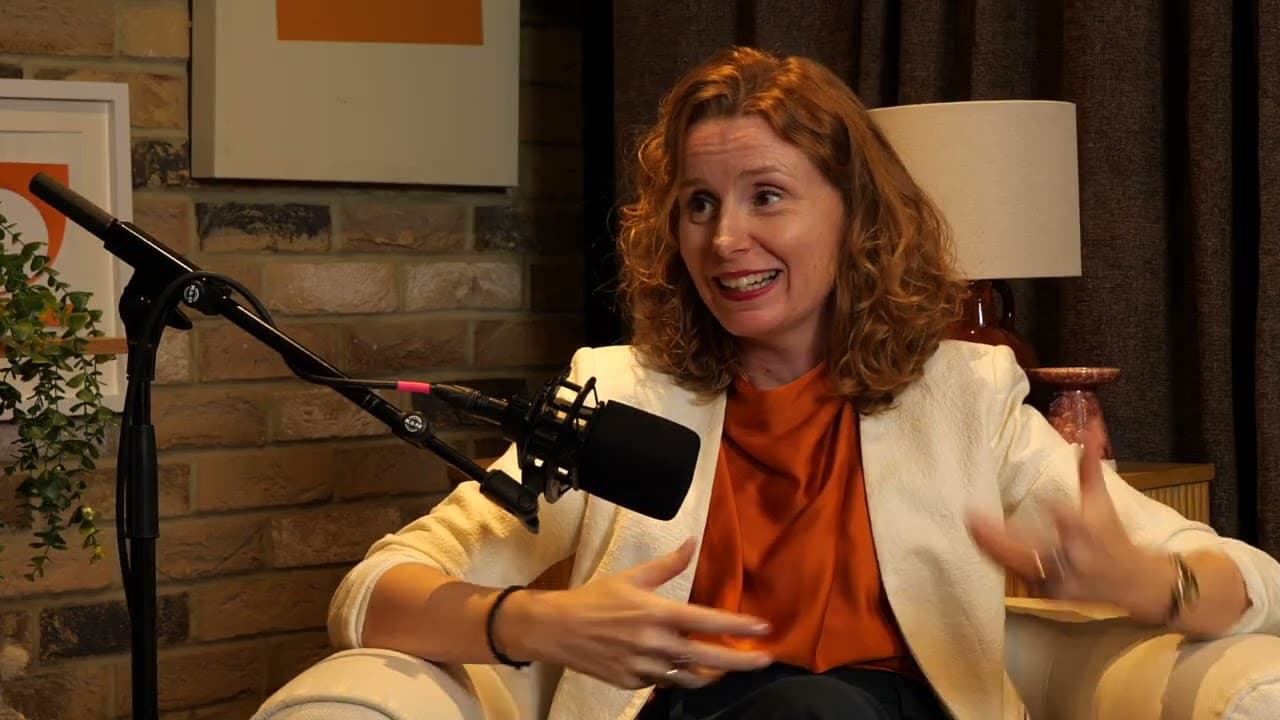
In this episode, I'm delighted to introduce Abbie Badcock-Broe, an industry strategist with two decades of experience shaping the future of the UK energy system. Known for cutting through complexity, she specializes in system-wide problem-solving across decarbonization, system operation, and long-range planning. Formerly the head of corporate UK and decarbonization strategy at National Grid, she has led major strategic shifts and built enterprise-wide foresight capabilities.
00.53 - 01.06 [Zoe Cunningham]
In this episode, we'll be talking about innovation and change within the energy industry, running the gamut from where we've come onto what's possible if we can find the right ways to get there. Abbie, welcome to the Digital Lighthouse.
01.06 - 01.09 [Abbie Badcock-Broe]
Thank you very much for having me. I'm really excited to be here today.
01.09 - 01.13 [Zoe Cunningham]
Before we started, you mentioned that you've been in the industry for 20 years.
01.14 - 01.14 [Abbie Badcock-Broe]
Mm-hmm.
01.14 - 01.26 [Zoe Cunningham]
So, what are the surprises that you weren't expecting when you started out? And I'm guessing AI and generative AI must be one. How's that impacting the sector?
01.26 - 01.38 [Abbie Badcock-Broe]
Yeah. So, the energy industry was something that I went into about 20 years ago because I was really looking at something that I was going to be purposely sort of attracted towards.
01.38 - 01.38 [Zoe Cunningham]
Yeah.
01.38 - 02.13 [Abbie Badcock-Broe]
And I remember where it all sort of culminated for me was going along to an all-party Parliamentary Committee on Climate Change meeting, something which cross-party consensus was really important about. And they were talking about peak oil and global warming, and this sort of impending sense of challenge and sustainability need that we have for this... this coming century, right? So, this was early, well, like mid-2000s, 2006, 2007. And then I thought, "Oh my God, I want to be part of that solution."
02.14 - 02.31 [Abbie Badcock-Broe]
I will say at that point, it was a case of there's loads of different tech solutions that could do things. I was looking at intelligent tech at the time, and that wasn't really the challenge. The challenge was sort of how do we actually get things in a mass market penetration?
02.31 - 02.32 [Zoe Cunningham]
Absolutely, yeah.
02.32 - 03.00 [Abbie Badcock-Broe]
So, I think really the big surprise was I was looking at renewables at the time, so I was looking at wind, but also looking at some of the stuff we have an abundance of, like wave technology, tidal technology, because we have great resources. But the uptake of solar and the mass amount of penetration for that, through the feed-in tariff and where that sort of led us now to actually having a lot of renewable generation from solar was unexpected.
03.00 - 03.00 [Zoe Cunningham]
Yeah.
03.00 - 03.18 [Abbie Badcock-Broe]
Because looking at where we saw the resource in Europe, it was like Spain, obviously. They have not just great light, but they have great heat that you can generate from that. So, why would you build solar here? And it just seemed insane. But that sort of technology penetration, the cost of solar massively going down-
03.18 - 03.18 [Zoe Cunningham]
Right
03.18 - 03.45 [Abbie Badcock-Broe]
... and batteries, and that tech has been a really positive step. But that comes with a big caveat that sort of the penetration of technology without the grid sort of in lockstep to it has meant we've got a massive bottleneck now that we're working through. And yeah, then it's really moved and really shifted. And I know we were discussing it all of that time ago, but now from very much a centralized system to decentralized, that needs to be very much digitally enabled.
03.46 - 04.14 [Abbie Badcock-Broe]
Managing a few power stations to passive consumers is a very different one-way trek. Now needing to be two-way, needing to be a lot smarter, intelligent, and then how we can have disaggregated assets, people with EVs or heat pumps in their homes, and how we can leverage all of that is just a very different and exciting place to be. So, there was that. And then the third one was the amount of women in the sector.
04.14 - 04.15 [Zoe Cunningham]
Mm.
04.15 - 04.15 [Abbie Badcock-Broe]
Very few.
04.16 - 04.16 [Zoe Cunningham]
Yes.
04.16 - 04.31 [Abbie Badcock-Broe]
I do remember being in conferences, and I would stand there, and I would probably be one of a handful of, if lucky, two handful of women in the room. It helped me stand out. And I never saw that as being a sort of a detriment, but what we're now seeing is that we're bringing more diversity through.
04.31 - 04.32 [Zoe Cunningham]
Brilliant. Yeah.
04.32 - 04.41 [Abbie Badcock-Broe]
And so that's helping in not just the role modeling that we need, but challenging some of that thinking as well, because that's how we solve problems creatively.
04.41 - 04.58 [Zoe Cunningham]
Let's talk about that specifically later on. It's really interesting what you were saying there about actually some of the challenges that we have solved perhaps in surprising ways but that we've got this. It's almost like we're solving one problem and more are developing-
04.58 - 04.58 [Abbie Badcock-Broe]
Yes
04.58 - 05.06 [Zoe Cunningham]
... because it's like as we find ways to produce more energy, we're finding ways to use it even more quickly.
05.06 - 05.06 [Abbie Badcock-Broe]
Yeah.
05.06 - 05.15 [Zoe Cunningham]
And I guess that's one of the challenges with AI, that I'm sure there are applications you can use within energy, but at the same time, it's using a vast amount of energy.
05.15 - 05.23 [Abbie Badcock-Broe]
Exactly, exactly. It feels like it's in that both giving great opportunity and taking something away at the moment.
05.23 - 05.23 [Zoe Cunningham]
Yeah.
05.23 - 05.51 [Abbie Badcock-Broe]
And it depends where you are in the energy system as to how much you think it's a headache and a hindrance versus a help. But you're right, sort of the growth of this and sort of... I mean, I wouldn't even say 20 years. I would say just even in the last five years is really impactful and already having some positive steps in how we are working today in the energy system and also what we're thinking about for this next five years as we're going through some further development.
05.51 - 05.52 [Zoe Cunningham]
Yeah.
05.52 - 06.36 [Abbie Badcock-Broe]
So, it has been something that I don't think we fully predicted or could forecast, but is actually helping us with things like forecasting and how we actually assimilate a lot more of the data points. Because as I mentioned about you go from a centralized system to something that's decentralized, and then you can put sensors on that and you can monitor and you can track things. That gives you very different data points from a very sort of slow, analog, cumbersome sort of network that we've had in the past. But doing that in the same way we've done before and asking sort of people in control rooms to be able to take all those decisions whilst trying to figure out all of these different data points just becomes too much of an insurmountable challenge.
06.36 - 07.10 [Abbie Badcock-Broe]
So, we can use that for forecasting. We can use that for thinking about the operations, definitely around things like predictive maintenance. So it's not just on the lifespan of something, but how it's actually performing so we can prevent some challenges and look at all those datasets. And then how we can actually manage the network using things like flexibility. So, literally just saying when people should be using, when something is looking really tight on the network so we need people to shift when they're going to be consuming, but also when there's actually an abundance and actually is sending out the signal saying-
07.11 - 07.11 [Zoe Cunningham]
Great. Get on now and use it!
07.11 - 07.49 [Abbie Badcock-Broe]
... "Use it now!" Yeah, exactly. So there's loads of points where short of some of the recent CEOs worrying about maybe agentic AI not necessarily having the moral code of humans which I think we're all having to learn and work through. I think it is really a tool that helps much more in that sort of whole system, disaggregated, digitized way that needs to be data-enabled. But we can't do it ourselves just purely from sort of the human-centric thinking unless we embrace everything that the tech community is able to help work with us on.
07.49 - 07.59 [Zoe Cunningham]
Well, that actually just leads me really well onto my next question. So, one of my favorite quotes is, "If you always do what you've always done, you'll always get what you've always got."
08.00 - 08.00 [Abbie Badcock-Broe]
Mm-hmm. Yeah.
08.00 - 08.04 [Zoe Cunningham]
And I think that that's what we're seeing with energy, right?
08.04 - 08.04 [Abbie Badcock-Broe]
Yeah.
08.04 - 08.24 [Zoe Cunningham]
That actually getting what we've always got is not good enough for the future, so the need for innovation is absolutely clear. But how do we get there? What's the best way to kickstart innovation and make sure that people are doing the things that are going to lead to doing things differently?
08.25 - 09.08 [Abbie Badcock-Broe]
It's a really important point, Zoe. I think it's just worthwhile stressing to the listeners and anyone who's engaging with this podcast, just like the scale and the enormity of the challenge that we're facing. Phrase that for those of us in the energy sector, we live and breathe is about the energy transition. And that means we're needing to make sure that we have a sustainable future where we can have homegrown generation matched with sort of the right network that we're building for the remainder, best part of this century, and then how we're going to operate that with the markets and the technologies and the actors and the players. And it's quite a complicated system to navigate.
09.08 - 09.08 [Zoe Cunningham]
Yeah.
09.08 - 09.38 [Abbie Badcock-Broe]
It's regulated as well. Because if you're talking about networks, which means that it's transporting where energy is generated to where it's then consumed, you need to make sure that it's doing it for the good of our citizens, our communities, our consumers. So this isn't about people just profiteering and making loads amount of cash. They need to be doing this in a really good way because we're effectively asking to spend money and innovate on things that's on behalf of others, so taking those sort of sensible decisions.
09.39 - 10.15 [Abbie Badcock-Broe]
So, it's the energy transition. It's happening in different ways, internationally, globally, and across different parts of the network and the system simultaneously. Sometimes it's progressing really well, sometimes there's lots of blockers and things, and that can feel a lot for us working in it. And actually, whilst we're going through the need to be sustainable, we are looking and we are impacted by greater climate-related events now. I think after the summer we've had here in 2026, no one would be surprised to say climate adaptation is now becoming part of the points on the agenda.
10.15 - 10.15 [Zoe Cunningham]
Yeah.
10.15 - 10.32 [Abbie Badcock-Broe]
Because we know that we're getting hotter summers, we'll be getting further droughts, we're getting sort of colder and more aggressive winter storms. And that means that we need to make sure that our reliable system doesn't become vulnerable because we haven't figured out how to actually manage the real assets.
10.32 - 11.09 [Abbie Badcock-Broe]
So, all of that's going on simultaneously. Plus, we need to make sure it's affordable, and we want to make sure that we are minimizing the amount of geopolitical shocks that we can have because we've seen the illegal invasion of Ukraine, what happened from Russia that drove up prices, and then also the Iran fallout earlier on this year. That means we're still exposed. So that's kind of the complication. Technology is really part of the enabling point here to sort of help, and we've never solved this challenge as a society before.
11.09 - 11.09 [Zoe Cunningham]
Yes.
11.09 - 11.28 [Abbie Badcock-Broe]
Right? That's a really simple statement. And that's the point where we need that creativity and that innovation, because we're shifting, as I mentioned, from centralized to decentralized. It needs to be digital, it needs to be democratized in a way as well, and it needs to decarbonize at the same time. So those are all of the things that we're looking at.
11.28 - 11.34 [Zoe Cunningham]
And we're almost running to standstill, aren't we? There's actually so much that needs to be done just to deliver what people expect already, right?
11.34 - 11.59 [Abbie Badcock-Broe]
Exactly. And in some ways, I think it's important just to stress that we're not starting, and we've never in this country started really from a blank sheet of paper. We are needing to upgrade a network and an energy system that some parts of it is over 100 years old, 150 years old. We were innovating sort of at the point of the first industrial revolution, and now we're going through a tech revolution.
11.59 - 12.43 [Abbie Badcock-Broe]
So, there was a massive buildout of the sort of electricity superhighway back in the 1950s in the post-war boom which was great. But then a lot of that hasn't really been further developed since. That built like a fantastic backbone, but now we're needing to upgrade because there's aging assets that are like 70 or 80 years old. They have far extended their life span. So we're doing reinforcements to upgrade that whilst also doubling the size of our network to be able to cater for rising demand and generation in different locations. And you want to house that closer to where people are using it rather than in very far remote places beforehand. So that kind of is sort of the situation.
12.43 - 12.45 [Zoe Cunningham]
That's the baseline. That's the starting point, yeah.
12.45 - 13.02 [Abbie Badcock-Broe]
It's the baseline. And on that innovation point, we know that we've got a lot to do. We've got a lot to do because we need to be able to figure out some of these technical challenges, these engineering challenges, these people challenges, and these consumer challenges simultaneously.
13.02 - 13.34 [Abbie Badcock-Broe]
So, how does that work is probably coming back to your earlier point there. Because we're regulated in the energy sector, and especially with regard to things like networks and everything that is on behalf of consumers, by our regulator, Ofgem, so the Office of Gas and Electricity Markets, they actually put out a call for, "Here's the five key areas that we as an industry need to be sort of all collectively working for on innovation programs," which is great. So it means then we can have something to rally around.
13.34 - 13.34 [Zoe Cunningham]
Yeah.
13.34 - 14.19 [Abbie Badcock-Broe]
And they do that through the Strategic Innovation Fund, SIF, colloquially known as, and then that helps work on some particular programs, whether it's sort of assets and predictive maintenance or also on the new build. And some of those are really over a lifespan of a few years, maybe three to four, up to about 10 years whilst we're looking at these challenges. And that helps us sort of plot what to go after, because really the challenge is not the number of innovation pilots, but it's the impact of getting that collective innovation all happening and also the valuable spend on behalf of consumers to make sure that it's actually working. Or where it's not working, we're sharing those lessons.
14.19 - 14.20 [Zoe Cunningham]
Yeah.
14.20 - 14.20 [Abbie Badcock-Broe]
And we're really-
14.20 - 14.21 [Zoe Cunningham]
And learning, yeah.
14.21 - 15.01 [Abbie Badcock-Broe]
Exactly, because a lot of the time, it's not just the big shiny things which are exciting. It's iterating and improving things as we go. I must say, a massive health warning through all of this, why it becomes a little bit more challenging, especially for tech providers, is understanding we're talking about critical national infrastructure. So things around cybersecurity, legacy systems, and making sure that the network is going to continue to be reliable all need to be factored into consideration. So, it's then understanding where are things that you can sort of play with and experiment, and then how to get through that experimentation phase into implementation.
15.01 - 15.13 [Zoe Cunningham]
Yeah, because it's all very well using energy in all these new, fantastic ways that we can now. If we're then relying on it and the energy isn't there, like you say, there is a kind of so many issues-
15.13 - 15.13 [Abbie Badcock-Broe]
Yes
15.13 - 15.26 [Zoe Cunningham]
... that could arise from that. So, changes in the next regulatory price control window, ED3, are going to mean a build program on a kind of scale that networks haven't seen in decades.
15.26 - 15.27 [Abbie Badcock-Broe]
Yeah.
15.27 - 15.38 [Zoe Cunningham]
But obviously, while at the same time you have to keep all the existing assets running, where do you see the biggest opportunities for innovation to kind of help get it all done?
15.39 - 15.48 [Abbie Badcock-Broe]
Yeah, it's really important. And we're quite into the flow of these types of business plans that come through from Ofgem, the regulator.
15.49 - 15.49 [Zoe Cunningham]
Yeah.
15.49 - 16.32 [Abbie Badcock-Broe]
So this is about making sure we've got the right incentives, the right outcomes that are being driven from the transmission networks. This year has been where it's gone live with what we describe as T3, so that's the transmission plan, the third one of these particular frameworks. And this year, in sort of space of about six weeks, I know that all the network distribution companies from electricity at the moment are putting in their draft plans, their first plans. They will then get the approvals back from the regulator next year, an early sort of assessment homework marking in the summer, and then it's finalized by the end of '27. And then we'll start in April '28 for five years, right?
16.32 - 16.32 [Zoe Cunningham]
Yeah.
16.32 - 17.11 [Abbie Badcock-Broe]
So that's all the plans that are going to happen for those distribution companies across 14 different regions. There's six of them all covering that, and that's a lot, right? That is then moving that into much more in that domestic home space. And really the key message is that the regulator is coming out with at the moment is twofold. It's build and flex, which is a shift from what it was beforehand. Beforehand, it was very much flexibility first. That's what we needed. Don't worry about building the network. Well, now we're in a system where we've got too many things to connect and not enough network to do it, so we need to catch up. But it needs to be the responsible spend of that.
17.11 - 18.28 [Abbie Badcock-Broe]
So it comes back to where is there a high level of confidence that if you build the network, there's going to be demand for it, and actually this is going to be really solving a problem and it's going to be a very sensible use of investment? And where there is sort of lower level of certainty or confidence is then how can we leverage that flexibility to dial up or to dial down to just make sure that the business case is going to be the right one and it's going to be really important. So on that innovation space, again, it comes back to data, right? It's understanding really what we've got. So going back to the forecasting, the operations, the maintenance of the network, and how that then is... What does that help from that flexibility before concrete perspective of constructing things? But as well as that and that sort of build piece, there's also how can it be done faster? How can it be done cheaper in all senses, right? Because this is about getting more effective and efficient with what we're constructing, and it is a little bit easier at sort of the local wires and sockets as opposed to the very large highways, as I mentioned before. But that's really the challenge that we're looking at in this next innovation space.
18.29 - 19.07 [Abbie Badcock-Broe]
And then it comes back to the plans that each of these distribution networks are pulling together. That will then be really helpful for anyone in that innovation and tech community to then go, "Right, we now know what your innovation programs need to shape up like. We also know how much investment that government is going to give you to enable this, and then how can we be used to sort of help." In some ways, not just take the creative thinking at the sort of the starting pilot piece, but really scale it up and make sure it gets implemented, because that's the big challenge that we have. We do not have a shortage of ideas, but it's really getting it into the BAU of businesses.
19.07 - 19.08 [Zoe Cunningham]
And implemented, yeah.
19.08 - 19.08 [Abbie Badcock-Broe]
Exactly.
19.08 - 19.08 [Zoe Cunningham]
Yeah, yeah.
19.08 - 19.41 [Abbie Badcock-Broe]
And so there is funding that's available. So if I talk back to the big plans that were going from a transmission perspective, it was like 90 billion pounds that the government were receiving plans from the transmission operators to be able to say, "Look, this is what investment needs to happen in that five-year period." About a third of that is fully committed at the moment, and the rest is sort of, again, how can they make sure they're building the business cases? So we expect that there will be a similar scale for what we're looking at in the distribution network. So there's lots to be done there.
19.41 - 19.41 [Zoe Cunningham]
Yeah.
19.41 - 19.57 [Abbie Badcock-Broe]
But it's then, again, how does it make sure that it's happening or building in the right places? We're using flexibility where it can be, and it can be done in a faster, cheaper way, and remove some of those blockages around things like planning and project development, and also being able to use more intelligent data.
19.58 - 20.32 [Zoe Cunningham]
So we're talking a lot about kind of future innovation and how we set things up to kind of achieve all these things we want in the future. But something that I think we can and should be looking at right now is using data that we have already. So, can you tell me a bit about where data's making the biggest practical difference right now, whether it's understanding asset conditions, like you mentioned earlier, or planning out big build programs, and what's holding us back in terms of using data?
20.32 - 20.54 [Abbie Badcock-Broe]
Yeah, it's a really good point. So, where it's working now is around things like forecasting, sort of inspections, and being able to do that predictive maintenance. And then also understanding how our grid is operating now, especially at that local level which we just didn't have beforehand.
20.55 - 20.57 [Zoe Cunningham]
And you're saying you mean local and a kind of detailed level?
20.58 - 20.58 [Abbie Badcock-Broe]
Yes, absolutely.
20.58 - 21.00 [Zoe Cunningham]
So, like, for every single user, yeah.
21.00 - 21.36 [Abbie Badcock-Broe]
Yeah. So coming back to that analogy of central versus now decentral, you've got different types of networks, right? So you've got the big superhighway, and then you've got the local roads, which is represented by our distribution networks. And they've also set up to have a system operator themselves, which is managing that. And if we now think about smart meters that are in home, that gives access and a data point to what's happening in the local consumption, and also things like substations, in a way that we just didn't have beforehand. It was really sort of black box level of understanding.
21.36 - 21.38 [Zoe Cunningham]
There was some energy. You got it or you didn't.
21.38 - 22.19 [Abbie Badcock-Broe]
Yeah, exactly. People got it, and it seemed to work. Not quite by magic. Lots of engineering went into it, but in a far less intelligent way than what we're sort of seeing now. On those sort of forecasting, there's lots of different examples. One that the National Energy System Operator have talked about recently is using improved weather data to be able to understand what the forecast looks like. So, and then how to utilize solar assets to be able to plan when to actually use things and aggregate and switch on batteries, et cetera. So there is really that point that's happening. I think forecasting is being improved across every single organization, depending on what they're looking like.
22.20 - 22.39 [Abbie Badcock-Broe]
My background's been in strategy, so a lot of that is scenario planning and forecasting, the pathway forward for a business and an organization. But that capability is definitely being improved through sort of data as well. And you mentioned about the assets and inspections, and being able to use and mobilize drones to be able to capture data-
22.39 - 22.39 [Zoe Cunningham]
Uh-huh. Yeah
22.39 - 23.10 [Abbie Badcock-Broe]
... rather than people. Now, the inspector who did things on a one-by-one basis would be very highly skilled, but then being able to capture all of that, sort of store all that information, that is giving us another great opportunity to be able to monitor things and then use those skills of the very intelligent people themselves to be able to track and sort of have a bigger impact whilst they're looking across a lot more assets, rather than perhaps they could do sort of in an eight-hour shift going up and down different poles.
23.11 - 23.11 [Zoe Cunningham]
Yeah.
23.11 - 23.14 [Abbie Badcock-Broe]
And also making sure we're still keeping safety and reliability running.
23.14 - 23.15 [Zoe Cunningham]
Mm-hmm.
23.15 - 23.30 [Abbie Badcock-Broe]
So those are the positives. What's the challenge, right? I've already mentioned about the legacy system. When you've got assets that were built back in the 1950s, being able to tap into all of that data quality is a bit of a challenge.
23.30 - 23.30 [Zoe Cunningham]
Yeah.
23.31 - 23.36 [Abbie Badcock-Broe]
So there's a quality of the data. There's also the piece around data sharing, right?
23.36 - 23.37 [Zoe Cunningham]
Okay.
23.37 - 23.52 [Abbie Badcock-Broe]
So, it becomes complicated when you have a personal relationship with a business, but sometimes we're talking about whole system benefits. So, how do we then be able to share all of that, and what's the interoperability of the data?
23.52 - 23.52 [Zoe Cunningham]
Yeah.
23.52 - 24.16 [Abbie Badcock-Broe]
And so I know it's quite dry, and for somebody who isn't a data specialist, it's something that makes my mind get a bit boggled by. But that is part of the challenge. Now, the regulator is sort of stipulating that they need the sector to get better at that data sharing and being able to make sure that we can then see how that different pieces are all coming together, but we're not fully there yet.
24.16 - 24.16 [Zoe Cunningham]
Yeah.
24.16 - 24.27 [Abbie Badcock-Broe]
Then sort of the challenges have also got to be, well, then... Who is owning this? How do you pull it all together, and how do you make sure that it's going to make a big difference as well?
24.27 - 24.27 [Zoe Cunningham]
Yeah.
24.27 - 25.05 [Abbie Badcock-Broe]
So there's a governance piece that is also involved there. And I think a lot of people's brains do also switch off when you mention things like governance about it, but it's really important. So, there's a pacing challenge. In some ways, we have the technology revolution that is accelerating things and actually could be a means for us to be able to hit a lot of the targets, and then we need to do things on delivery. But you've then got some blocks and some things which we need to be able to overcome at the same time whilst then navigating the fact this is critical national infrastructure that we still need to make sure is operating safely and reliably.
25.06 - 25.17 [Zoe Cunningham]
Yeah. Blocks is such a good analogy, actually, because if you're going at speed... it's great if you've got a lovely clear road. Zoop, off you go. If you put a block in, you're going to have like a nasty pileup, so yeah.
25.17 - 25.38 [Abbie Badcock-Broe]
Exactly. And you need to sort of work through that, and I think this is that sort of problem-solving that's needed on all of these points. And as you mentioned, this is lots of things happening simultaneously with one another as well, and loads of different actors that are involved. So, how do they all get galvanized behind one clear direction and vision to sort of work towards?
25.39 - 25.52 [Zoe Cunningham]
Yeah. Well, I think that's actually kind of what I want to kind of finish the chat with, is actually talking about what is the role of leadership and how do you prioritize leadership skills, I guess-
25.52 - 25.52 [Abbie Badcock-Broe]
Yeah
25.52 - 26.18 [Zoe Cunningham]
... in this age when everyone's talking about tech and everyone's saying, "What can tech do?" And perhaps we need to make sure we're also spending the time saying, "Well, how do we have the right people to lead on the tech so that we can deliver the potential of the tech?" And I think it's also worth a little callback to what you mentioned at the start about the changing makeup of leaders and how does that affect the kind of solutions that we're going to get going forwards?
26.19 - 27.13 [Abbie Badcock-Broe]
It's 100% vital that we get the right leadership and skills and culture which also comes back to incentives. So some of that is sort of incentives that government have, but also how the corporates and business sector actually incentivize people to learn rather than being scared of making a failure, right? So it's how can you take risks which are managed risks, but actually progress things and move them further forward? And I think this is a really critical point. Bringing together sort of the culmination across engineering, policy, regulation, technology, all of that is really vital for a thriving, really successful future domestic and international energy system that we need to operate within. That means that leaders need to be bold and brave, set the direction, but also comfortable that we don't necessarily know all the answers yet?
27.13 - 27.14 [Zoe Cunningham]
Yes.
27.14 - 27.48 [Abbie Badcock-Broe]
Because this is part of the sort of iterative, creative way of working through something. And we probably know roughly what, but the how is continuing to evolve and emerge, and being able to be confident that we've got the right skills in our organizations to do that with somebody there looking out for them and saying, "Yep, don't worry. As long as we're not messing up the critical core parts of our business, this is the place, and we're also going to continue to invest in that." I think another important thing about leadership is helping to navigate uncertainty.
27.48 - 27.48 [Zoe Cunningham]
Yes.
27.48 - 28.00 [Abbie Badcock-Broe]
And a phrase that I learned over 10 years ago, and it's really stuck with me, has been about VUCA and the VUCA world we operate in. That means volatile, uncertain, complex, and ambiguous.
28.01 - 28.02 [Zoe Cunningham]
Right.
28.02 - 28.05 [Abbie Badcock-Broe]
We are definitely in that space right now, right?
28.05 - 28.06 [Zoe Cunningham]
Yeah. Yeah, yeah, yeah.
28.06 - 28.49 [Abbie Badcock-Broe]
There are things which pop up and crop up, and it has an impact. And people love to have certainty. So we need to take investment decisions now. We're building out networks that will last for at least 40 years, and if they're anything like the ones that we had back in the 1950s, might double the lifespan. So, that could be that we're making investment decisions right now that sees us through to the end of this century. And we don't have all the information but we need to make sure that we're building things with high confidence in places where we need it. We're flexing things and being creative in where we're not so sure, but still with that open-mindedness. And I think it's also the role of the leader now is not to actually micromanage and know all the answers for everything-
28.49 - 28.49 [Zoe Cunningham]
Absolutely, yeah
28.49 - 29.04 [Abbie Badcock-Broe]
... but to give people that space and give them the confidence and taking those courage moments themselves to say, "Yeah, let's work on this together." So I think it's sort of that rallying cry, and also it's really important that people can trust.
29.05 - 29.06 [Zoe Cunningham]
Yeah.
29.06 - 29.07 [Abbie Badcock-Broe]
So it's really, really vital.
29.08 - 29.10 [Zoe Cunningham]
Yes. Wow, it's a big challenge, right?
29.10 - 29.11 [Abbie Badcock-Broe]
It is.
29.11 - 29.24 [Zoe Cunningham]
And I think that I really just resonate with what you're saying there. You have to be learning. If you're not going into it with a learning mindset, it won't be possible, because if it was possible with what we've got already, it would already be done.
29.24 - 29.24 [Abbie Badcock-Broe]
Yes.
29.24 - 29.35 [Zoe Cunningham]
No, we all have to learn, and we all have to work with other people. There is no solution that doesn't involve a lot of people with a lot of different skill sets working together.
29.35 - 29.55 [Abbie Badcock-Broe]
And I think for me, one of the reasons why I wanted to get into this space 20 years ago was because, as I said, I want to be part of the solution rather than just the problem. Energy is something that fuels our entire economies, and it's now in the points that is interspersing and interacting with so many other industries, right?
29.55 - 29.55 [Zoe Cunningham]
Yeah.
29.56 - 30.20 [Abbie Badcock-Broe]
And I don't think it's an either/or. It's a case of technology is really helping the energy sector because it's what powers the AI growth and the demand and connections queues and all of those other things which are interesting, right? So I think that's what's really critical right now, is seeing how do we actually work on something that's going to be really useful and bring all those creative thoughts and minds into the sector so we can make a big difference.
30.21 - 30.28 [Zoe Cunningham]
Oh, well, thank you so much, Abbie, for joining me and helping us to shine a light for others going forwards.
30.28 - 30.30 [Abbie Badcock-Broe]
You're very welcome. Thank you for the invite.
30.31 - 31.02 [Zoe Cunningham]
This Digital Lighthouse episode was edited by Steve Folland and produced by Patrick Anderson. The theme music was written and recorded by Ben Baylow. A huge thanks to our sponsor, Softwire, for their continuing support from the inception of the show in 2019 to the present day. If you love the podcast, please let us know with a rating and review on your platform of choice. We're always looking for feedback to ensure we're making the best show possible. And if you'd like to take part, please drop us a line at thedigitallighthouse@softwire.com.
31.02 - 31.11 [Zoe Cunningham]
You've been listening to The Digital Lighthouse with me, Zoe Cunningham. Thank you for sharing your time with us, and stay safe on this wild technological ride that we're all on.