Transcript
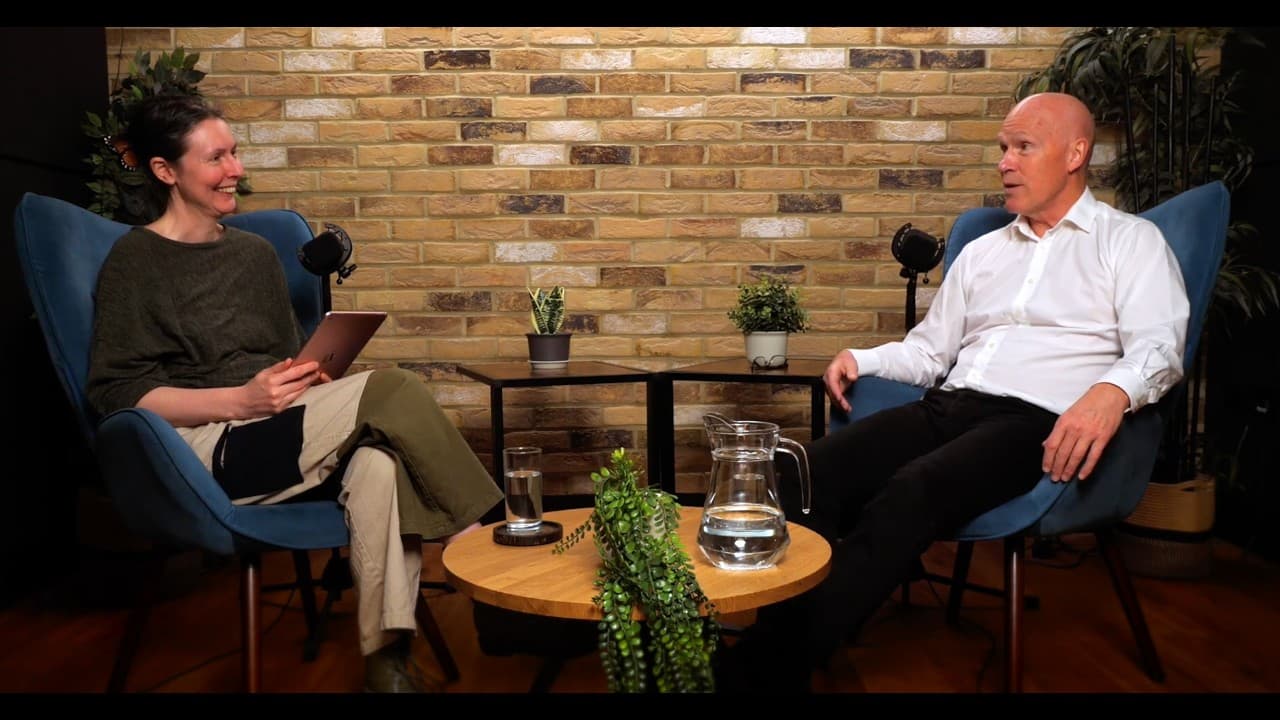
[00:00:00] Zoe Cunningham: Hello, and welcome to The Digital Lighthouse, where we get inspiration from tech leaders to help us navigate the exciting and ever-evolving world of digital transformation. I’m Zoe Cunningham. We believe that meaningful conversations can illuminate the path forward, helping us harness the power of technology for innovation, scalability, and sustainability.
[00:00:24] Zoe Cunningham: In this episode, I’m delighted to introduce Andy Burton, who has over 30 years experience in the tech industry. He’s currently interim CTO at Ageas UK, having moved there from his role as CTO at esure Group, where he led a huge transformation project that we will definitely be chatting through later on in the show. Previously, his experience includes 10 years in senior tech leadership roles at Sky Betting & Gaming, and a CTO role at The Very Group, the UK’s biggest integrated digital retailer.
[00:00:57] Zoe Cunningham: In this episode, we’ll be exploring leading people through change, big and small. We’ll look at key stories from Andy’s career to draw out the important lessons on why, how, and when to consider the impact of change on your team. Andy, welcome to The Digital Lighthouse.
[00:01:14] Andy Burton: Thank you. Really good to be here. Really nice to meet you.
[00:01:16] Zoe Cunningham: Could you start by telling us about your journey to get to the role that you’re in today, what you’ve done, how you got there?
[00:01:24] Andy Burton: Yeah, absolutely. I started in tech nearly 40 years ago now, so late ’80s, as my first job as a grad. So hands-on software. Well, we called ourselves analyst programmers in those days actually.
[00:01:36] Zoe Cunningham: Mm-hmm.
[00:01:36] Andy Burton: We didn’t have such specialisms, so we did a bit of everything. We did requirements, we did coding, we did testing, we supported stuff that was live. And I spent probably nearly 10 years in various financial services organisations, really sort of learning the trade of software engineering and being a technologist.
[00:01:55] Andy Burton: I then felt I wanted to get a more commercial focus, not just focus on the tech side of things, so I joined KPMG Consulting in the late ’90s, which was a really good move for me. So I was in at deep end time and time again. This was at a time when people were just starting to get onto the internet for the first time, didn’t really know what to do. They were nervous about – is it safe, is it secure, et cetera. So I spent four years at KPMG, and really, I learned a huge amount through that. By the end of that, 2002, the whole landscape of business-
[00:02:25] Zoe Cunningham: Yeah
[00:02:26] Andy Burton: … and commerce and tech was completely different from what it was before, of course. After that, I then moved into… I joined Freeserve. So you might remember Freeserve. It was an ISP.
[00:02:36] Zoe Cunningham: I do.
[00:02:37] Andy Burton: It was a virtual ISP, actually.
[00:02:38] Zoe Cunningham: Yeah.
[00:02:39] Andy Burton: It started in the late ’90s. Really innovative business model. Nobody had done it before. Hugely successful, and became the biggest ISP in the UK very, very quickly. Listed on the FTSE. Was acquired by a French business, and that’s about the time when I joined, and that was a great experience for me. It was a time when people were just trying things.
[00:03:00] Andy Burton: Lots of things that we talk about now, whether that’s agile or whether it’s social media, we didn’t call it those things in those days, but that’s what we were doing. And it was about getting consumer-facing products in front of customers quickly, as fast as you can, getting feedback. Some of them flopped massively, some of them worked really well.
[00:03:17] Andy Burton: The whole world was changing, really, at that point. Certainly from a tech point of view, companies like Google just starting to come through. They’d just bought YouTube at that point. So really early stage of a lot of the things that we take for granted now. After that, it became part of Orange. It was acquired again by France Telecom, became part of Orange, and I was in charge of web development for Orange in the UK.
[00:03:39] Andy Burton: That took us up to probably about 2006, 2008, in fact, at that point. And I then left, and I joined Sky Bet. At that point, a very small business. It was part of Sky, part of the larger Sky group. A hugely well-established brand, very successful in broadband and TV, of course. And they had this very small business based in Yorkshire around online betting and gaming. I went along, I met the team there, I met the CEO and the rest of his team, and I felt, this could be really interesting. I don’t know anything about online betting, but it sounds like it could be really interesting, and I think it’s a great bunch of people to work with. I’ll take that and see how it goes. And actually, it was a fantastic experience. So I was there as the CTO for nearly 10 years in the end. We scaled the business hugely. We became the biggest in the UK. We invested massively in tech and product.
[00:04:25] Zoe Cunningham: Mm.
[00:04:25] Andy Burton: It’s such a competitive, online betting, like online retail, which I went on to later, hugely competitive, and you have to really be on top of your game in terms of the customer experience. You need to be getting the right price, the right product in front of customers at the right time.
[00:04:39] Zoe Cunningham: And fast, right?
[00:04:40] Andy Burton: And fast.
[00:04:41] Zoe Cunningham: Yeah.
[00:04:41] Andy Burton: Yeah. Constantly evolving and coming up with new products, new ideas, and trying them out, and seeing, again, a bit like Freeserve, seeing which ones work, and some of them don’t, and some of them can go on to be massively successful. And that was a really, you know… scaling the tech team from about 30 when I started to about 800 when I left.
[00:05:03] Andy Burton: As you scale, things that work at a certain point, ways of working, teams, structures, operating models, all that stuff, they work to a certain point, and then you scale a bit more, and it starts creaking, and you have to pivot, and you have to try different models.
[00:05:17] Andy Burton: And it’s the same with the tech stack, of course. As we were scaling from a small customer base to the biggest in the UK, we had to constantly innovate, try new models, new products, new open source products, so that it could keep scaling the platform so that the response times are where they need to be, and customers could find the products really quickly. And as part of that, we sold the business to a private equity firm, and then we sold it again later. We went into Italy, we went into Germany. So hugely successful from a business point of view, hugely rewarding from a personal point of view. I learned a huge amount through that, and I think we created a fantastic culture and a tech-led business there.
[00:05:54] Andy Burton: I then went on to, as we sold the business, I then left. I was the CTO at The Very Group, so the biggest integrated online retailer and financial services business in the UK. A big customer base, many of them paying on credit, so it’s regulated by Financial Services Authority… Financial Conduct Authority even.
[00:06:14] Zoe Cunningham: Is that one of the reasons that Very was… Is that one of the principles it was set up with to sell on credit?
[00:06:20] Andy Burton: Yeah. So if you remember Littlewoods, actually. So this goes right back… goes right back to the 1930s, I think, and John Moores and his business that he started selling essentially on credit. So people getting things that they didn’t necessarily have the money up front, they’d get the clothes for the kids or whatever it was, through the catalogs in the old days, and they’d pay it off on a weekly or monthly basis. And it’s that same business model that had been transitioned to online. The catalogs and the Littlewoods shops and everything had gone, and it’s a purely online business at that point.
[00:06:52] Andy Burton: Again, very competitive. So many online retailers, so being able to stand out, having innovative offerings. Everyone’s got similar products, so it’s really about the customer experience through all those different journeys. And using data through betting and then through online retail, having the right data at the right time to be able to make decisions is really critical.
[00:07:14] Andy Burton: And then, what I’ve been doing for the last five years, actually, I joined esure just over five years ago, actually, 2021. At that point, it had previously been a founder-led business. It had scaled up to a certain point, and then the founder had sold to a private equity firm, and they’d had a very strong vision to really re-platform the business, and to build a modern insurance company.
[00:07:40] Zoe Cunningham: Yeah.
[00:07:40] Andy Burton: A tech-led insurance company. So we spent five years, well, three years doing the transformation, and the last two years really driving the business forwards from there. Which culminated in, last year, in the business being sold to Ageas, a large Belgian-based insurer.
[00:07:57] Andy Burton: So for the last six months, I’ve been the CTO of that business, as an interim, whilst I replace myself and go on to do my next thing, which is exactly what brings us right up to date.
[00:08:08] Zoe Cunningham: All right. Well, we’ll definitely be talking about that. And actually, just looking at your career history, right? There’s so much change in so many roles where it’s almost like the day-to-day has changed. If you’re scaling, you might be selling the same things to the same people on nominally the same platform, but actually everything is changing every day. And in many ways, that’s the hardest type of change to manage because it’s gradual. You’re not like, one day it’s this, next day it’s this. It’s like every day it’s a little bit…
[00:08:41] Andy Burton: Yeah. I think that’s right, and I’ve seen that in different forms, actually. There’s that type of change. There’s also the bigger change. So if I think about my time at Freeserve. The business when I joined was very simple. It was a dial-up broadband business. Again, great model. You’d go along to Dixons or PC World, you get your laptop, people are getting online for the first time around about the turn of the millennium. Lots of people got their first laptops. They open the box, and there’s a CD inside to connect them to the internet, and the first page they hit is freeserve.com. So, we kind of started off a really simple business, but as time went by, we were constantly bringing in major types of change, and moving from dial-up to broadband was a really substantial change.
[00:09:22] Andy Burton: And then bringing in things like voice over IPs and then TV over IP. So using that connection into your home for all different types of product, and each time it got more sophisticated. The billing relationship, the CRM, the data warehouse you needed to back it all up. So you get those kind of big changes and the constant week by week changes underneath it.
[00:09:43] Zoe Cunningham: And some are incremental and some are kind of totally changing direction. On which note, let’s talk about this big transformation at esure, because I think sometimes you can learn from the most challenging situations we’re in. I think you can always learn lessons that actually then apply even in more simple challenges, hopefully. So what was the state of play at esure when you joined?
[00:10:10] Andy Burton: Well, I joined it, it was 2021, so just over five years ago. As I say, the business had been sold, the founder had sold the business to a private equity firm. They brought in a new CEO. He was hiring his new exec team, and I was the CTO as part of that. When I actually landed on the ground, and actually it wasn’t, because we were in the middle of COVID, but we’ll perhaps come back to that. At that point, we already had hundreds of people working on this transformation program.
[00:10:37] Andy Burton: There was a sort of clear set of pain points that we were trying to solve, and there was a clear direction of travel, a target we were trying to get to. And we’d mobilised really quickly. We’ve got really ambitious plans. We wanted to do this transformation within three years, which was really to completely re-platform the business. So to your question of what was it like, if I think about some of the sort of core elements. From a customer experience point of view, at that point, over 80% of customer contacts were phone-based, so customers calling us. So we had big contact centres.
[00:11:08] Zoe Cunningham: Wow, okay. Yeah.
[00:11:09] Andy Burton: As the business scaled, we would’ve had to keep scaling these contact centres. It wasn’t a great model. So a big part of what we were doing then, it was very analog, and a big part of what we wanted to do was to really digitise the business or the customer experience.
[00:11:22] Andy Burton: So that’s part of it. We had… the platforms that we already had in place and the applications that we had in place, very traditional, so it was on-premises. It was big tin sort of based systems. Probably not much open source at that point. Big, expensive licensed products. The pace of tech change was very slow.
[00:11:39] Andy Burton: It was a constraint on the business. There’s so many things that business owners wanted to do, and they weren’t able to. Had to really prioritise because the funnel of getting stuff through that change pipeline, it was very narrow. So, that was one of the big pain points and drivers of change. We weren’t really talking about innovation because we couldn’t even get the basics out quickly enough. So…
[00:12:01] Zoe Cunningham: It’s like a double whammy, isn’t it? Because you’ve got an old system that can’t do what you need, but also that’s built at a time when there was no appreciation of how quickly things need to change. So it doesn’t do what you want, and it’s really hard to change-
[00:12:16] Andy Burton: Yeah
[00:12:16] Zoe Cunningham: … and make it do what you want. It must have been going in pretty clear, that change was needed. What was your outlook like at the time? Like, what were things that you maybe thought then would happen that didn’t, or you weren’t expecting?
[00:12:34] Andy Burton: Yeah. So it’s an interesting one. And again, the timing of it made it more of a challenge. So 2021, it’s quite easy to forget this now, but we’re in lockdown.
[00:12:44] Zoe Cunningham: Yeah.
[00:12:45] Andy Burton: So I joined in January ’21. I didn’t actually go into the office, the physical office, for the first four or five months actually, because of various lockdowns.
[00:12:52] Zoe Cunningham: Mm-hmm.
[00:12:53] Andy Burton: So one of the things that didn’t happen that I thought would happen was that we’d all get back into the office and we’d work in the office. My previous sort of pre-COVID model really, and also at SkyBet and of places that I worked, was people are working in squads, product delivery squads, in the office five days a week in their squads.
[00:13:12] Zoe Cunningham: Like very closely together.
[00:13:14] Andy Burton: Very close together.
[00:13:14] Zoe Cunningham: Yeah.
[00:13:14] Andy Burton: Literally very close together. Product and tech working side by side. And, by doing that, we got phenomenal sort of velocity, you got phenomenal understanding of customer needs, and got really close to customers. And there was no bridge, no gap between tech and the rest of the business. We were a tech-led business.
[00:13:33] Andy Burton: So I naively, I suppose, assumed that we’d all be back in the office one day and working in that model. The reality was, we never did. And because we wanted to mobilise quickly, because of the ambitious plans, it meant that we’re not going to hire 500 people, and they’re not going to be in Reigate, which is where the business was headquartered.
[00:13:50] Zoe Cunningham: Right.
[00:13:50] Andy Burton: So we worked with our existing teams, and we partnered heavily. We’ve had some really good partners. A lot of people in Central Europe, so in the Baltics, in Romania, Macedonia, North Macedonia, places like that. And we did the whole thing remotely.
[00:14:08] Andy Burton: There’s no doubt about it, it was a very successful transformation program. We achieved what we intended to do. We actually did it remarkably in the time period. We almost did it on budget.
[00:14:19] Andy Burton: In the overall scheme of things, it’s pretty good. And we really sort of built… We didn’t just replace the platforms, we didn’t just digitize the business, we digitised ourselves. So we became… When I talk about a digital business, there’s lots of digital business out there. On the face of it, digital, the web, and they might not be telephone-based, they might be chat-based and everything. But actually, digital on the inside for me means it’s about how you work, and lots of people recognise it. It’s the way that you get customer feedback, the way that you prioritise your road maps, the way that you deliver incrementally, the automation that you have in place, the AI you have on top, all those things. That’s, for me, about being digital on the inside.
[00:14:58] Andy Burton: And so we transformed to that. And we also became a much more lean and agile business across the whole business, not just the tech and product area, but across the whole business. Every aspect changed along the way, whether it’s finance, legal, risk, compliance, InfoSec. Over that three, four-year period, we really transformed all of those areas.
[00:15:18] Zoe Cunningham: Yeah. And I think we’ve kind of come a long way, because I remember when I was kind of starting out in my career, and it became rapidly apparent that tech had applications in literally every part of a business. And it was like, anything you want to do, tech can help you do it better. And then COVID really accelerated that, I think, for a lot of businesses that maybe hadn’t quite got with the program. Suddenly people were saying, “Oh, okay, this needs to be digitised and this needs… ” You know, all of it needs to be digitised.
[00:15:50] Andy Burton: Yeah. I think that’s true. I think often you start in certain areas, and you have certain obvious areas and certain allies maybe amongst the exec who are really not having stuff pushed on them. They’re pulling it. They want to be more digital.
[00:16:03] Andy Burton: Some get it more than others. But I think it only goes so far. If your whole business isn’t going in that direction. So if you’re budgeting or the way you think about risk and compliance or legal or data protection, InfoSec, all those areas, what you don’t want is you got really high velocity product delivery squads and then they hit all these roadblocks when they’re trying to get live with new… whether it’s a big thing or a small thing.
[00:16:28] Andy Burton: So my answer to that is to embed all of that within the sort of delivery cycle. So make sure that you got your risk, your compliance, you got your legal teams. And what I saw work really well at esure was that all those areas, HR and various other areas as well, really started adopting and adapting actually some of the principles that you’d use in a software, in an agile software environment.
[00:16:54] Zoe Cunningham: Yeah, absolutely. We’ve actually seen that in marketing. Agile can be applied anywhere, as a theoretical kind of framework.
[00:17:02] Andy Burton: Yeah, absolutely. Absolutely.
[00:17:05] Zoe Cunningham: Well, you went through all of this process to kind of like transform the business and then sold it. Where do you kind of go from there?
[00:17:13] Andy Burton: What, me personally or the business?
[00:17:14] Zoe Cunningham: Well, the business. I suppose what I’m hinting at is it sounds so nice and simple, doesn’t it? We have a plan for transformation. We make a plan. We start it. We finish it. We all congratulate ourselves.
[00:17:26] Andy Burton: Mm-hmm.
[00:17:26] Zoe Cunningham: But actually that’s not the reality, is it?
[00:17:28] Andy Burton: Yeah. No, it’s far from reality, no. We did have a plan. We had a target we were trying to get to. We had some KPIs that we wanted to move. So the example I gave earlier of customer contacts, over 80% were voice-based beforehand, and it’s now less than 8%. It’s digitised now. So we had those. But no, nothing… we had a high level plan. It didn’t work out. We had to pivot many, many times. There was a whole bunch of big things out of our control. So, the fact that we were doing it during COVID as an example. Yeah, the war in Ukraine was a big… We had delivery partners, developers and testers in all sorts of countries, including Ukraine, including Belarus and Russia, Poland, the Baltics. So yeah, things like that.
[00:18:14] Andy Burton: Things like on the back of COVID, the supply chain issues that we had, the costs that that brought specifically into insurance. And I’m sure you remember a couple of years ago, your home and your car insurance suddenly went through the roof, and that was a direct result of all those increased costs in the supply chain. And then we had to adapt.
[00:18:29] Zoe Cunningham: Yeah.
[00:18:30] Andy Burton: We had to deal with that problem. So there’s a whole bunch of big and small things along the way that meant we had to constantly kind of pivot and iterate on how we were working. The bit that was remarkable was that we started out with a plan that we thought would take three years, and we actually did it in three years. And when I say did it, we built out this brand new platform, we started selling new business on that platform, and we then migrated the back book from the legacy platform onto the new platform and decommissioned, and this is really important, getting around to decommissioning all the legacy.
[00:19:04] Andy Burton: I think lots of people, they don’t get to that final step.
[00:19:08] Zoe Cunningham: Yes, exactly.
[00:19:08] Andy Burton: And there’s always something else that they would rather invest in rather than decommissioning, and I think that was the big thing, from day one, we were going to decom. We didn’t want this legacy that was still slowing us down.
[00:19:20] Zoe Cunningham: Or like a parallel system, right?
[00:19:21] Andy Burton: Yeah, exactly.
[00:19:22] Zoe Cunningham: When actually all you’ve done is double the challenges that you’ve got. Yeah.
[00:19:26] Andy Burton: Yeah. So we made sure that we decommissioned all that, and what that meant is that we’re now 100% cloud-based. We got the digitisation of the business that I talked about. We achieved that. We achieved the transition to being a much more agile, lean business. So we’re delivering software much, much faster than we ever could before, an order of magnitude faster than we could before. And it means that we can constantly improve the customer experience. We’re constantly going after new opportunities, big and small.
[00:19:56] Andy Burton: And to come back to your question, what does that mean? Well, we were private equity-owned at that point, and of course, there was always going to be an exit from that situation, and that’s what happened last year when Ageas bought the esure business.
[00:20:07] Zoe Cunningham: And was the exit kind of tied to the transformation even, that it was kind of contingent on that, I guess?
[00:20:13] Andy Burton: Yeah. Well, it was a huge part of it. There’s always a world where somebody came along, an acquirer came along at the right time with the right cheque, but it was always assumed that it would be contingent on completing that replatforming of the business.
[00:20:27] Zoe Cunningham: And demonstrating the value, I guess.
[00:20:30] Andy Burton: Demonstrating that we’ve got a really low-cost platform that we can scale at low cost, and that we can deliver change and innovate on top of really quickly. So, it’s less than a year after completing the transformation that we were then in detailed discussions with acquirers about that. So there’s always a little bit of a gap, but that was definitely a big part of it, to have achieved that transformation. To have transformed the business in the ways that I’ve described, to have become that kind of lean, agile enterprise.
[00:20:59] Zoe Cunningham: Yeah, brilliant. And what would you say is the impact on the new normal? Is it a sense of we’ve done a transformation and now we’re in a new phase, and we have a new playbook for how we go about things going forward? Or is it more of a, actually, we’ve just learnt there’s so many more things we need to do, it’s almost like we’re now in this constant change forever?
[00:21:24] Andy Burton: Yeah. It’s a bit of both. So we finished, as I say, after three years, we finished the transformation. At that point, we’d decommissioned all the legacy, we’re on the new platform, new ways of working and so on. And we transitioned at that point to target operating model. And this is, we were largely there already, but it’s really doubling down on lean and agile.
[00:21:42] Zoe Cunningham: Yeah.
[00:21:43] Andy Burton: So it was product delivery squads embedded throughout the business. There was no kind of IT department. That went-
[00:21:49] Zoe Cunningham: Yeah, brilliant
[00:21:50] Andy Burton: … long gone.
[00:21:50] Zoe Cunningham: Yeah.
[00:21:50] Andy Burton: It’s tech embedded throughout the business. It was agile ways of working. It was about kind of lean product development. It was about DevSecOps, all those things. We really doubled down on all of those, and we got about a year where we were really just getting really good at everything we were doing. And then, of course, everything changes because that’s when we move into the sales cycle. So we’re acquired by a different business.
[00:22:15] Zoe Cunningham: Yeah.
[00:22:16] Andy Burton: And what we’ve been doing for the last six months, three months in real earnest, but six months, we started to think about it six months ago, is bringing together those two businesses. So we want to do, in many ways, it’s doing more of what esure did, actually. So it’s about getting onto new platforms, it’s about decommissioning legacy platforms. It’s about having aligned cultures across the whole business.
[00:22:38] Zoe Cunningham: Yeah.
[00:22:38] Andy Burton: So that’s one really big thing for me about the whole people and culture side of things and what we’ve got now, inevitably two different businesses, two different cultures. So it’s about really taking the best of both of those and creating this new single UK business with consistent ways of working, consistent approach to infosec, for example.
[00:22:59] Zoe Cunningham: Yeah.
[00:22:59] Andy Burton: As a CTO, that’s something that’s front of mind for me, and it’s bringing it all together, which that’s a big challenge in itself, and it’s going to take the next couple of years to do that, bring the tech platforms and bring the teams and the whole businesses together.
[00:23:12] Zoe Cunningham: You must feel like a tremendous sense of personal achievement to kind of got to where you are and kind of have it in a great shape to hand over.
[00:23:21] Andy Burton: Yeah, I do, absolutely. I think there’s plenty of other insurers and people outside insurance as well who’ve tried, they’ve gone on similar journeys. They’ve spent literally hundreds of millions of pounds, and they’ve had to write it off without achieving anything. I don’t know about the stats, the data on that. We all know that big transformation programs often don’t end well.
[00:23:39] Zoe Cunningham: Right, yes.
[00:23:40] Andy Burton: So the fact that we actually did it, and we did everything that we set out to achieve, yeah, I think it was a really special team. It’s not everybody that can do that, and I think, yeah, I certainly took a lot of pride from that, and I think as a business, we did.
[00:23:55] Zoe Cunningham: And so what is next for you?
[00:23:57] Andy Burton: So for me personally, I was always clear that that sort of phase of transformation of esure was a particular piece of work that I really wanted to do. I was also clear that that was going to be my last full-time CTO role.
[00:24:09] Zoe Cunningham: Yeah.
[00:24:09] Andy Burton: I was looking to, by the end of it, or by now, to move into a more sort of part-time sort of advisory, maybe a bit of board work, but definitely not a full-time 100 mile an hour thing. I’m very happy to hand over. The things that I just described, bringing two platforms, two business together, it was a good three years of really interesting, hard, rewarding work I had there. And yeah, my replacement’s just joined in the last few weeks, new CTO, and I’m sure he and the exec team, the whole business will have lots of fun and lots of tears and lots of excitement along the way, but it’s just not the right time for me. I’ve kind of spent nearly 40 years doing that, and I don’t feel the need to go through that quite same again.
[00:24:53] Zoe Cunningham: Yes. Oh, well, thank you so much for coming on and sharing your story with us.
[00:24:58] Andy Burton: My pleasure.
[00:24:58] Zoe Cunningham: Yeah, it’s been really great to meet you.
[00:25:00] Andy Burton: Yeah. Thank you.
[00:25:01] Zoe Cunningham: This Digital Lighthouse episode was edited by Steve Folland and produced by Patrick Anderson. The theme music was written and recorded by Ben Baylow.
[00:25:10] Zoe Cunningham: A huge thanks to our sponsor, Softwire, for their continuing support from the inception of the show in 2019 to the present day. If you love the podcast, please let us know with a rating and review on your platform of choice. We’re always looking for feedback to ensure we’re making the best show possible.
[00:25:28] Zoe Cunningham: And if you’d like to take part, please drop us a line at thedigitallighthouse\@softwire.com.
[00:25:34] Zoe Cunningham: You’ve been listening to The Digital Lighthouse with me, Zoe Cunningham. Thank you for sharing your time with us, and stay safe on this wild technological ride that we’re all on.