Transcript
00.16 - 00:21 [Zoe Cunningham]
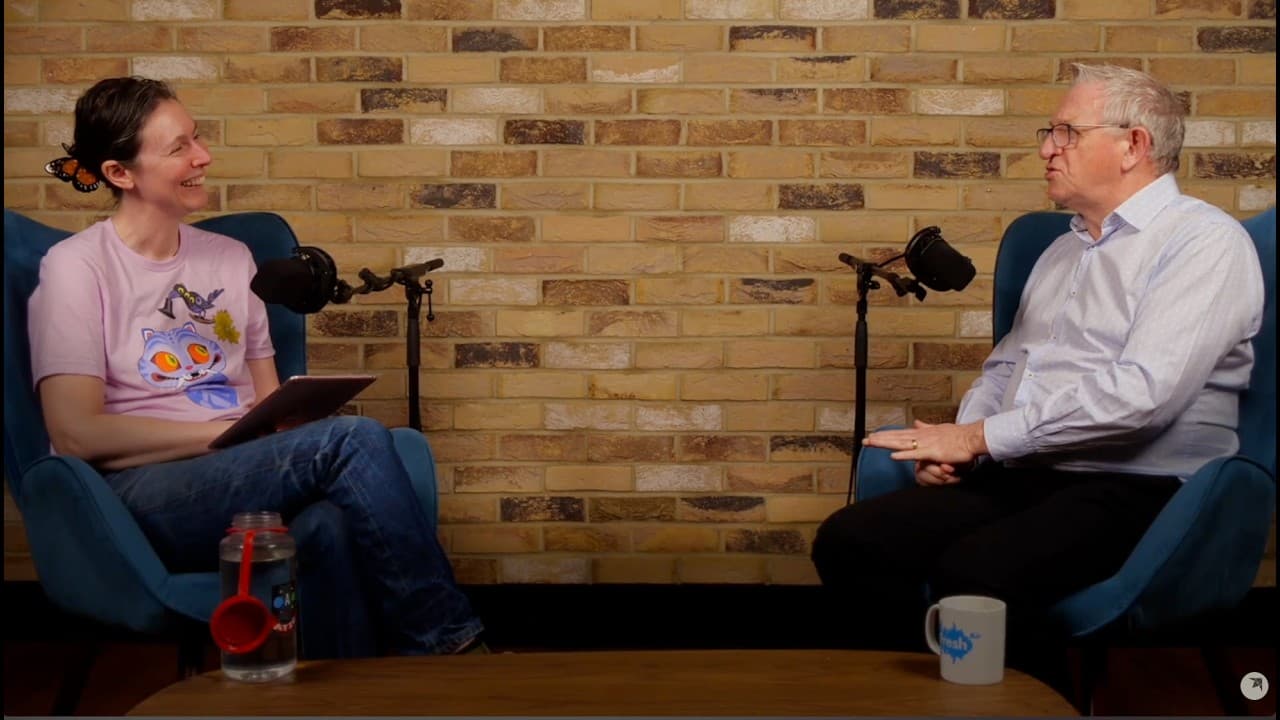
Hello, and welcome to The Digital Lighthouse, where we get inspiration from tech leaders to help us navigate the exciting and ever-evolving world of digital transformation. I'm Zoe Cunningham. We believe that meaningful conversations can illuminate the path forward, helping us harness the power of technology for innovation, scalability, and sustainability.
00:21 - 00:36 [Zoe Cunningham]
In this episode, I'm delighted to introduce David Williams. He's a senior executive and non-executive director with over 30 years' experience in insurance. He's currently the chair at the Fire Protection Association and a non-executive director at Claims.
00.36 - 00.52 [Zoe Cunningham]
David's previous roles include working at AXA Insurance UK, where he led AXA's work on connected and autonomous vehicles, including work with five government-backed consortia. He was also the chair of the Association of British Insurers Motor Committee.
00.52 - 01:04 [Zoe Cunningham]
In this episode, we'll be exploring the future and the present of driverless vehicles, and how we can utilize insurance tech to improve our daily lives. David, welcome to The Digital Lighthouse.
01:04 - 01:05 [David Williams]
Thank you.
01:05 - 01:19 [Zoe Cunningham]
So can you tell us maybe a bit about the journey? You've had this long and varied journey to get to where you are today. What are the kind of significant milestones and roles that you've had on that journey?
01:19 - 1:41 [David Williams]
So like most people, I stumbled into insurance, and found I enjoyed it and loved the people and therefore stayed in it. And I've moved around the country, and I've done lots of different roles whilst mainly working for one company. The whole connected and autonomous vehicle piece comes, I suppose, from, I've always had an interest in cars.
01:41 - 01:41 [Zoe Cunningham]
Mm-hmm.
01:41 - 2:00 [David Williams]
I was on the board of Thatcham, which is the Motor Vehicle Research Institute. But then we got to about 2015, and we were just doing one of these sessions where you think, "What are the future risks to the business?" Not pricing risks, but what's the risk to the business? And-
02:00 - 02:04 [Zoe Cunningham]
As in catastrophic risks that will wipe out the business, those kind of risks, or?
02:04 - 02:08 [David Williams]
Yeah. Or deliver a completely different market that we wouldn't be ready for.
02:08 - 02:08 [Zoe Cunningham]
Mm.
02:08 - 02:27 [David Williams]
And one of the things that I said was, "Well, what if driverless cars come?" We make a lot of money from... Well, we don't make a lot of money, we get a lot of premium from motor insurance, so what if people aren't driving cars anymore? And we asked ourselves the question, what do we know about driverless cars? The reality was we knew nothing.
02:28 - 00:02 [David Williams]
We'd maybe seen them in a movie...
02:29 - 02:30 [Zoe Cunningham]
Right
02:30 - 02:33 [David Williams]
... or read about them and got excited about them.
02:33 - 02:33 [Zoe Cunningham]
Yeah.
02:33 - 03:07 [David Williams]
And this was 2015, and the government were just starting to fund consortia, whereby they would try to get cross-industry groups together to develop different areas of technology, and one of those areas was connected and autonomous vehicles. So we had this great idea. What we'd do is we'd see if we could join one of these consortia. We'd be then hanging around with lots of clever science people that did know lots about driverless cars. And we'd naturally be able to learn.
03:07 - 03:07 [Zoe Cunningham]
Mm-hmm.
03:08 - 03:29 [David Williams]
So we thought that was a good idea. We thought we'd fail miserably, but what we, I suppose, didn't understand is that if you work for a very large insurer, your brand has a value, which people like to be involved in development work. But also insurance is fundamental when you're talking about motor vehicles.
03:29 - 03:29 [Zoe Cunningham]
Right.
03:29 - 03:40 [David Williams]
It's still the biggest cause of deaths of males under the age of 25 globally. And therefore, people wanted us to get involved. So...
03:40 - 03:48 [Zoe Cunningham]
Because in many ways you must have expertise within the insurance industry of what can go wrong with a vehicle, right?
03:48 - 03:57 [David Williams]
Yes, but going back to Thatcham, the Motor Vehicle Research Institute, it was great. If there was a new vehicle coming onto the market, we'd crash it into some things-
03:57 - 03:57 [Zoe Cunningham]
Yeah. Right. Exactly. Yeah
03:57 - 04:00 [David Williams]
... and work out how much it was going to cost to repair.
04:00 - 04:23 [David Williams]
But insurance relies on data. We look at past patterns. When you're talking about driverless cars, automated vehicles, it's a whole new world. Nobody's got any data on... or nobody had any data on that. So one of the things that we thought we'd do is, again, by hanging around with these really intelligent people and getting involved, we'd be able to build some data.
04:23 - 04:42 [David Williams]
And before you know it, over sort of three, four years, we were involved in five government-funded consortia, all looking at connected and autonomous vehicles from different aspects. And I was leading it because my company wanted me to, and also it was really interesting.
04:42 - 04:43 [Zoe Cunningham]
Yeah.
04:43 - 05:14 [David Williams]
And so I then ended up chairing the Association of British Insurers' Autonomous Driving Group and the ABI Motor Committee, and I found myself just being asked to get involved in lots of things, from really interesting things like going round and seeing tests, seeing cars crash into each other or avoid, things like that, to really quite dull stuff like discussing the minutiae of regulations in British standard testing and stuff like that.
05:14 - 05:25 [David Williams]
So that's where I ended up really where I was in terms of I was seen as the sort of go-to person within the insurance industry to speak to on driverless cars.
05:25 - 05:30 [Zoe Cunningham]
Which is probably not somewhere you could have possibly imagined when you started your career.
05:30 - 05:41 [David Williams]
Not at all. As I said, my dad was very into motor vehicles, and I think he felt badly let down when I joined an insurance company. He would rather I'd picked up a spanner or a spray gun.
05:41 - 05:42 [Zoe Cunningham]
Uh-huh. Okay.
05:42 - 05:56 [David Williams]
But I do remember, actually, the only time he took interest in my career was when I got involved with Thatcham initially and... But I think the reality is, when you're looking at a job, there are going to be some bits that are more sort of process and a bit boring, let's say.
05:56 - 05:56 [Zoe Cunningham]
Yeah.
05:56 - 06:01 [David Williams]
But what I think you need to do is you need to look for the exciting and interesting bits within that job.
06:01 - 06:01 [Zoe Cunningham]
Absolutely.
06:01 - 06:08 [David Williams]
And therefore, if you can balance that within a role, it's much easier to commit to it and do your better job overall.
06:08 - 06:11 [Zoe Cunningham]
Yeah, definitely. And I think tech is a great industry for that.
06:11 - 06:11 [David Williams]
Very much so, yeah.
06:11 - 06:16 [Zoe Cunningham]
There's so many exciting... And no one has a job, like you say, that's all the exciting bits-
06:16 - 06:16 [David Williams]
No
06:16 - 06:19[Zoe Cunningham]
... but there are a lot of exciting bits out there.
06:19 - 06:19 [David Williams]
Absolutely.
06:19 - 00:06:28,024 [Zoe Cunningham]
So maybe could you set the scene for us with what kinds of automated driving are already on our roads? Because actually there's a whole continuum, isn't there?
06:28 - 00:06 [David Williams]
There is.
06:28 - 06:37 [Zoe Cunningham]
From fully autonomous to, I guess, even looking back 10, 20 years ago, there were aspects of it within our vehicles.
06:37 - 07:03 [David Williams]
Yeah. So, there are these things that are referred to as the SAE levels of autonomy, and they run, you can argue, from zero through to five. And one would be cruise control, which has been around for a long time. And level two is when you get into adaptive cruise control where you can be behind a vehicle and it'll automatically slow down when the vehicle in front slows down, and things like that.
07:04 - 07:13 [David Williams]
People think that Teslas are autonomous. They're not. They're great technology, but generally, they're level two.
07:13 - 00:07:13 [Zoe Cunningham]
Right.
07:13 - 07:17 [David Williams]
So level two is very much they're driver assistance.
07:17 - 07:18 [Zoe Cunningham]
Yeah.
07:18 - 07:51 [David Williams]
In fact, they've recently been banned in some countries from using the expression 'autopilot' because it's not autopilot, it's driver assistance. And I get a bit obsessed about that because it's really important for people to understand that up to high level three, probably level four, the car might be doing a lot of the work, but you need to remain engaged. It's not until you get to level four and level five, which are the true autonomous levels, that you can just completely relax and-
07:51 - 07:51 [Zoe Cunningham]
Yes
07:51 - 08:21 [David Williams]
... do more than taking your hands off the wheel. So at this point in time, we're just about dipping into level three with, I suppose I'd call it sort of adaptive cruise control on steroids, where there's a little bit of potential lane changing, but it's not true autonomy. And certainly in the UK, you are still required to be available to step in if the machine decides it's, "I can't cope, and I want you to drive."
08:21 - 08:23 [Zoe Cunningham]
Yes. And hence, you are very clearly accountable-
08:23 - 08:24 [David Williams]
Exactly, yeah
08:24 - 08:25 [Zoe Cunningham]
... as the human-
08:25 - 08:26 [David Williams]
Exactly, yeah
08:26 - 08:27 [Zoe Cunningham]
... in the machine.
08:28 - 08:29 [David Williams]
Yeah.
08:29 - 08:35 [Zoe Cunningham]
Okay. So, what kind of approval process has there been to get to this cruise control that's out there already?
08:35 - 09:08 [David Williams]
Yeah. It goes through two different phases. So there's vehicle type approval, which applies to mass produced vehicles, so cars generally. You can sort of get round it if you're prototyping a very small number, and that's where a lot of the test vehicles come from. But you have something called UNECE, which is a UN committee that considers specifications and capability, and signs a vehicle off effectively as being considered safe generally.
09:08 - 09:12 [Zoe Cunningham]
Okay. And so that's what? Like a couple of years or months or what's the-
09:13 - 09:15 [David Williams]
Yeah, nothing proceeds quickly there.
09:15 - 09:15 [Zoe Cunningham]
Yeah.
09:15 - 09:17 [David Williams]
So yes, probably a couple of years.
09:17 - 00:09:19 [Zoe Cunningham]
So it's thorough though, I suppose-
09:19 - 09:19 [David Williams]
Yes, exactly
09:19 - 09:20 [Zoe Cunningham]
... is what I'm trying to get at. Yeah.
09:20 - 09:47 [David Williams]
But even then, once a vehicle has been type approved, it then needs to get local permission. Now, a lot of the time, it's just like UNECE, you're setting the rules with regard to colours of indicators, reversing lights, things like that. But when you get into automated driving, then local countries, individual countries need to set their own regulations to allow them to be on the road.
09:47 - 10:11 [David Williams]
And that's the case in terms of, so legislation was required to allow a couple of vehicles to have that sort of high-end level two, base level three. So they'd been approved and were available. So there was a Mercedes S-Class. Unsurprising, I suppose. And that was available in Germany, probably for about a year before it was allowed on UK roads.
10:11 - 10:14 [Zoe Cunningham]
Yes. All right. Okay. So we're getting closer-
10:14 - 10:15 [David Williams]
Yeah
10:15 - 10:23 [Zoe Cunningham]
... but it sounds like we're not actually there in terms of what you would consider autonomous cars on the road.
10:23 - 10:35 [David Williams]
So, I don't think we'll ever see, or maybe not in my lifetime... When you talk about autonomous, you probably talk about level five. You're talking about a car that can drive absolutely anywhere. Okay?
10:35 - 10:39 [Zoe Cunningham]
So what I'm talking about... is I actually haven't passed my driving test.
10:39 - 10:39 [David Williams]
No.
10:39 - 10:44 [Zoe Cunningham]
And I was hoping that I would kind of be redeemed-
10:44 - 10:44 [David Williams]
Yeah
10:44 - 10:50 [Zoe Cunningham]
... in the, be like, "Oh, look, I didn't actually need it. I can now just go and sit in a car, and the car will..." Like getting on a train.
10:50 - 10:50 [David Williams]
Yeah.
10:50 - 10:54 [Zoe Cunningham]
The car will take me wherever I want to go, and I can switch off from it.
10:54 - 10:58 [David Williams]
You will get that in the UK, I believe, this year.
10:58 - 10:58 [Zoe Cunningham]
Okay.
10:58 - 11:05 [David Williams]
Okay? Now, it might still be in pilot stage, and you might have to put up with the strange experience of a safety driver-
11:05 - 11:06 [Zoe Cunningham]
Okay
11:06 - 11:19 [David Williams]
... sitting in the front and not actually doing anything. But so, Waymo, who are known globally, owned by Google, they are trialing in London from September, I think it is.
11:19 - 11:19 [Zoe Cunningham]
Okay.
11:19 - 11:43 [David Williams]
And Wayve, who are a UK firm who take a very different approach, they're on the streets of London now out there testing. So you can't... I don't think you can actually get in one of their vehicles yet, but what they need to do, as well as all the behind the keyboard machinations, they need to be out there driving around, gathering data.
11:43 - 11:44 [Zoe Cunningham]
Yeah. All right. Okay.
11:44 - 11:45 [David Williams]
So that's what they're out there now.
11:45 - 11:49 [Zoe Cunningham]
Yeah. So it's not just about kind of theoretically proving that your car-
11:49 - 11:49 [David Williams]
No
11:49 - 11:50 [Zoe Cunningham]
... can be safe, it's about data-
11:50 - 11:52 [David Williams]
This is the fine-tuning
11:52 - 11:52 [Zoe Cunningham]
... like you say. Yeah.
11:52 - 12:08 [David Williams]
This is the fine-tuning to prove, and then those vehicles will be effectively licensed. And so it will be in a taxi environment rather than owning one yourself, but they will be available in London. I'm confident, this year in limited numbers, and then probably more so in 2027.
12:08 - 12:35 [Zoe Cunningham]
That's very exciting. But you kind of mentioned, in 2015 when you started to get involved in this area, that the government was kind of starting to set up these consortia and invest in this as a direction for the country. How good would you say the UK government has been at supporting these kind of tech innovations or not?
12:35 - 12:37 [David Williams]
I think they've been excellent.
12:37 - 12:37 [Zoe Cunningham]
Yeah.
12:37 - 12:50 [David Williams]
I genuinely believe they've been excellent. In terms of numbers, I think they talk about a figure of 600 million invested so far, but that's probably joint government and industry funding.
12:50 - 12:51 [Zoe Cunningham]
Yes. Okay. Yeah.
12:51 - 13:09 [David Williams]
But they have really been trying to accelerate it. They see the benefits of the UK being at the forefront. What tends to happen a lot in the UK, particularly in technology, is we come up with these great ideas and then the firms get poached by Americans or...
13:09 - 13:11 [Zoe Cunningham]
Either the individuals go or they buy the whole firm.
13:11 - 13:11 [David Williams]
Exactly.
00:13 - 13:12 [Zoe Cunningham]
Right. Yeah.
13:12 - 00:13 [David Williams]
So I think the fact they've been prepared to commit some investment has been great, but also in terms of, whilst everybody seems to think that the US is so much further ahead than the UK, I would dispute that. Obviously, I'm coming from an insurance perspective, but you've got 50 states with completely different legislative frameworks. So you will find that a particular firm is doing a lot with automated driving in one city, and one city only.
13:44 - 13:44 [Zoe Cunningham]
Yeah.
13:44 - 14:12,684 [David Williams]
Whereas I think what the UK have tried to do, and we've now had the Automated Vehicle Act, which came into law, I think it was May 2024. But even before that, we had what was originally the Modern Transport Bill and then the Automated and Electric Vehicle Act and things like that. We've tried to set out as clearly as we can what the legal framework is going to be to encourage firms to rather move away from the UK-
14:12 - 14:12 [Zoe Cunningham]
Yeah
14:12 - 14:27 [David Williams]
... but to come to the UK. And certainly if you read what Waymo, who have been doing lots overseas are saying, I think they really appreciate what the government and legal structures are trying to do in terms of set things out clearly.
14:27 - 14:30 [Zoe Cunningham]
Right. Because it's one of the preconditions for investment, right?
14:30 - 14:30 [David Williams]
Yeah, absolutely.
14:30 - 14:36 [Zoe Cunningham]
That if you don't know what the conditions and criteria are going to be, you don't know whether your investment's going to pay off or not.
14:36 - 14:37 [David Williams]
Exactly. Yeah.
14:37 - 14:46 [Zoe Cunningham]
So you kind of have to have that to start with. And does that mean that we will see things rolling out across the whole country rather than London only?
14:46 - 14:47 [David Williams]
I think it varies.
14:47 - 14:48 [Zoe Cunningham]
Mm-hmm.
14:48 - 14:55 [David Williams]
Certainly, one of the original benefits that we talked about was bringing mobility to isolated and elderly people.
14:55 - 14:55 [Zoe Cunningham]
Right. Yeah.
14:57 - 15:02 [David Williams]
Little villages where they haven't even got a bus route, very elderly people, that sort of thing.
15:02 - 15:03 [Zoe Cunningham]
And it's got worse, hasn't it?
15:03 - 15:03 [David Williams]
Yes.
15:03 - 15:04 [Zoe Cunningham]
There are actually fewer bus routes now-
15:04 - 15:05 [David Williams]
Exactly
15:05 - 15:05 [Zoe Cunningham]
... than there used to be.
15:05 - 15:05 [David Williams]
Exactly.
15:05 - 15:07 [Zoe Cunningham]
So hence, more isolated people. Yeah.
15:07 - 15:30 [David Williams]
So the idea of being able to summon an autonomous vehicle sounded like a great idea, and I think that's still on the cards. The problem is you do have to spend a huge amount of money. So Wayve, for instance, the UK firm, they've just raised 1.1 billion pounds to cover development costs, and therefore naturally you're going to focus where the market is.
15:30 - 15:30 [Zoe Cunningham]
Yeah.
15:30 - 15:48 [David Williams]
And that's why, it's not that London's easier. London's not easier. So I think it's a case of you've got the size of the market and the opportunity there, combined with if you can get a vehicle to drive around some of the roads in London, then my word- ... it can drive anywhere. Do you see what I mean?
15:48 - 15:48 [Zoe Cunningham]
Right. Yeah. Exactly.
15:48 - 15:51 [David Williams]
So it will eventually spread out.
15:51 - 15:51 [Zoe Cunningham]
Yeah.
15:51 - 16:00 [David Williams]
Inevitably, just like when Uber were launching their driven taxi service, initially it was just in the very large markets.
16:00 - 16:02 [Zoe Cunningham]
But hopefully, at least the legislation is the same.
16:0 - 16:05 [David Williams]
Yeah, the legislation will be completely standard. Yeah.
16:05 - 16:07 [Zoe Cunningham]
Yep. Just a question of rolling it out.
16:07 - 16:08 [David Williams]
Yeah.
16:08 - 16:34 [Zoe Cunningham]
So you've seen 30 years of technology changes across the insurance sector in general, and what would you say have been the most significant high level changes to technology that have affected insurance? So I suppose either things you're insuring now that you weren't before, or ways of doing business that really are quite revolutionary.
16:34 - 16:38 [David Williams]
You see, I do go back to a time when everything was on paper.
16:38 - 16:39 [Zoe Cunningham]
It's unbelievable, isn't it?
16:39 - 16:46 [David Williams]
And really some of the green screens that would just be a financial transaction, and that would be all.
16:47 - 17:01 [David Williams]
I think what we've seen now is, and I think it's been good generally, is there's much more complexity. So genuinely, I remember when I started in insurance, there were two rates for buildings anywhere in the UK.
17:01 - 17:01 [Zoe Cunningham]
Yeah
17:01 - 17:09 [David Williams]
... just two rates. And now we get motor insurance where you'll have 280 different rating factors.
17:09 - 17:10 [Zoe Cunningham]
Mm.
17:10 - 17:11 [David Williams]
So that-
17:11 - 17:13 [Zoe Cunningham]
So it's the complexity of the models that-
17:13 - 17:15 [David Williams]
Yeah, and understanding the risk more.
17:15 - 17:15 [Zoe Cunningham]
Yeah
17:15 - 17:50 [David Williams]
Because clearly there's more than two different types of houses and two different types of neighbourhoods and locations and individuals in the UK. But I think technology has enabled us. You know, machine learning was massive in terms of being able to liberate actuarial time to focus on other things. But in terms of also, availability of data. So if you think of the number of publicly available databases, which are really useful, and then on top of that, there are a large number of firms that make very good money by selling additional data and services.
17:50 - 17:51 [Zoe Cunningham]
Mm-hmm.
17:51 - 17:57 [David Williams]
So that's the biggest transformation, I think, in terms of that complexity, which hopefully the customer never sees.
17:57 - 17:57 [Zoe Cunningham]
Yeah. Right
17:57 - 18:13 [David Williams]
And it really is a case of rather than being just dumped in a couple of very big buckets, we are now trying to understand the risks and needs presented by an individual. So you're virtually getting down to a pool of one, as we would say.
18:13 - 18:35 [David Williams]
Which is interesting when the whole principle of insurance is meant to be leveling things out and sharing across a broader pool. But we do understand much more, what individual people want and also the risks that they run, which enable us to both price and also tailor the product to their needs much, much better.
18:35 - 18:44 [Zoe Cunningham]
Yeah. And that's absolutely fascinating because I imagine at the same time, the user experience, you're getting a more complex, like you say, product or service-
18:44 - 18:44 [David Williams]
Yes
18:44 - 18:57 [Zoe Cunningham]
... from the insurance broker. But at the same time, the response times must be quicker, right? Actually, you've not got people going off and having to do loads of sums and research your situation.
18:57 - 19:06 [David Williams]
Oh no no. Yeah, so hate to always go back to motor insurance, but a typical insurance company will do sort of 20 million quotes a day.
19:06 - 19:07 [Zoe Cunningham]
Mm-hmm.
19:07 - 19:15 [David Williams]
If you're doing 20 million quotes a day, that shows you how rapidly... And when we talk about external databases, access time is all important.
19:15 - 19:15 [Zoe Cunningham]
Yeah
19:15 - 19:42 [David Williams]
Because if it takes two, three seconds to send a message, get the data back, well, it's too long. Because people are expecting pretty much an instant quotation, and with all these things coming together. So it's not perfect, but I think... I would be amazed if I'd woken up after a 30 year sleep from how we were doing things back in the day, to now. Just absolutely be amazed how much we've progressed.
19:44 - 19:47 [Zoe Cunningham]
Brilliant. And then driverless cars this year, it can't get any better.
19:47 - 19:48 [David Williams]
Indeed.
19:48 - 19:54 [Zoe Cunningham]
Can we just finish with a fun question? So there's a well-known problem called The Trolley Problem.
19:54 - 19:55 [David Williams]
Ah.
19:55 - 20:04 [Zoe Cunningham]
Where traditionally it's about a train on two tracks, and if you're the driver and you will kill a varying number of people, depending on which way you go.
20:04 - 20:05 [David Williams]
Yeah.
20:05 - 20:16 [Zoe Cunningham]
What's your moral obligation, to change tracks or not change tracks? And it brings up questions of, is action different from inaction?
20:16 - 00:20 [David Williams]
Yeah.
20:16 - 20:21 [Zoe Cunningham]
But maybe could you formulate it in terms of driverless cars, and then tell us the answer?
20:21 - 20:30 [David Williams]
Well, yeah. So, and people like to take this example of, so you've got a young mother with her children, their lives ahead of them, pushing the pram across the street.
20:30 - 20:30 [Zoe Cunningham]
Yeah.
20:30 - 20:39 [David Williams]
And the only way to avoid hitting them is to veer off the road, and there's some elderly pensioners on a bench or in a bus queue.
20:39 - 20:39 [Zoe Cunningham]
Mm-hmm
20:39 - 20:43 [David Williams]
So what decision does the car make?
20:43 - 20:44 [Zoe Cunningham]
Yes.
20:44 - 20:44 [David Williams]
And-
20:44 - 20:45 [Zoe Cunningham]
And how does it do it, I guess?
20:45 - 20:58 [David Williams]
Yeah. And it's a great question in terms of, because everybody always asks it, but the easy question is, there is no way the car is ever going to make an assessment as to the value of individual life.
20:58 - 20:59 [Zoe Cunningham]
Yes.
20:59 - 21:06 [David Williams]
It also, to a degree, I suppose, shows an underestimation of how really good a lidar detector, for instance, is.
21:06 - 21:07 [Zoe Cunningham]
Yes.
21:07 - 21:14 [David Williams]
In terms of you'd have to be going at one hell of a speed to be able to get your pram and kids out in front of the road without the car noticing it.
21:14 - 21:44 [David Williams]
But the dull answer is that the cars will not be looking to assess the value of life. What they will be looking to do is avoid accidents at all costs, effectively. And to comply with the law. And therefore, what they will do is they will not be looking to come off the road and crash into a bus queue. They will be staying on the road. They will be automatically slamming on those brakes and hoping that they are able to stop.
21:44 - 22:13 [David Williams]
So it's a case of, I suppose, rather than making a value decision, which in the trolley problem you have to either choose, do you flick to send the train down a different track or not? There is no such decision being made. The vehicle will do its best to avoid the accident and comply with the law, and that means staying on the road as intended. But genuinely, these sensors, they can see around corners. They can see 100 meters ahead.
22:13 - 22:13 [Zoe Cunningham]
Yeah.
22:13 - 22:17 [David Williams]
Statistically, it's already established that...
22:17 - 22:19 [Zoe Cunningham]
It knows who's on the pavement and...
22:19 - 22:40 [David Williams]
Exactly. But also in terms of safety, driverless cars versus manually driven, 90% of road accidents currently are caused by human error. They are much safer. And therefore, it's an interesting question. I think there'd be all sorts of legal problems if they started trying to assess the value of life. There would be outcry.
22:40 - 22:51 [David Williams]
Mercedes made a stupid comment at one point. They were asked the trolley question. They said, well, what they would do is they would concentrate on protecting their drivers. Their owners. Which again, you can understand.
22:51 - 22:51 [Zoe Cunningham]
Yeah
22:51 - 22:58 [David Williams]
But even that got a lot of criticism. So it's about being as safe as you can and complying with the law.
22:58 - 23:02 [Zoe Cunningham]
And actually, like you say, the number one rule of the law is stop.
23:02 - 23:03 [David Williams]
Yeah
23:03 - 23:11 [Zoe Cunningham]
Is stay where you are and stop. And actually it's almost a human understanding to think, oh, well, you could imagine swerving if there was a dog or a child.
23:11 - 23:12 [David Williams]
Exactly.
23:12 - 23:19 [Zoe Cunningham]
You could imagine that happening and what would that mean? Whereas actually, all the car is going to do is say, "Something is in my way."
23:19 - 23:19 [David Williams]
Yeah.
23:19 - 23:21 [Zoe Cunningham]
"I'm not going to crash into that."
00:23:21,406 --> 00:23:21,416 [David Williams]
Exactly.
23:21 - 23:26 [Zoe Cunningham]
And that actually doesn't matter if it's a child or a dog or a tree, it's still going to stop.
23:26 - 23:27 [David Williams]
Exactly.
23:27 - 23:28 [Zoe Cunningham]
It's that simple.
23:28 - 23:28 [David Williams]
Very much so.
23:28 - 23:30 [Zoe Cunningham]
Oh, well, thank you so much, David-
23:30 - 23:31 [David Williams]
My pleasure
23:31 - 23:34 [Zoe Cunningham]
... for coming onto The Digital Lighthouse and helping us shine a light for others.
23:34 - 23:35 [David Williams]
Thank you.
23:35 - 23:44 [Zoe Cunningham]
This Digital Lighthouse episode was edited by Steve Folland and produced by Patrick Anderson. The theme music was written and recorded by Ben Baylow.
23:44 - 24:00 [Zoe Cunningham]
A huge thanks to our sponsor, Softwire, for their continuing support from the inception of the show in 2019 to the present day. If you love the podcast, please let us know with a rating and review on your platform of choice. We're always looking for feedback to ensure we're making the best show possible.
24:00 - 24:06 [Zoe Cunningham]
And if you'd like to take part, please drop us a line at thedigitallighthouse@softwire.com.
24:06 - 24:15 [Zoe Cunningham]
You've been listening to The Digital Lighthouse with me, Zoe Cunningham. Thank you for sharing your time with us, and stay safe on this wild technological ride that we're all on.