Transcript
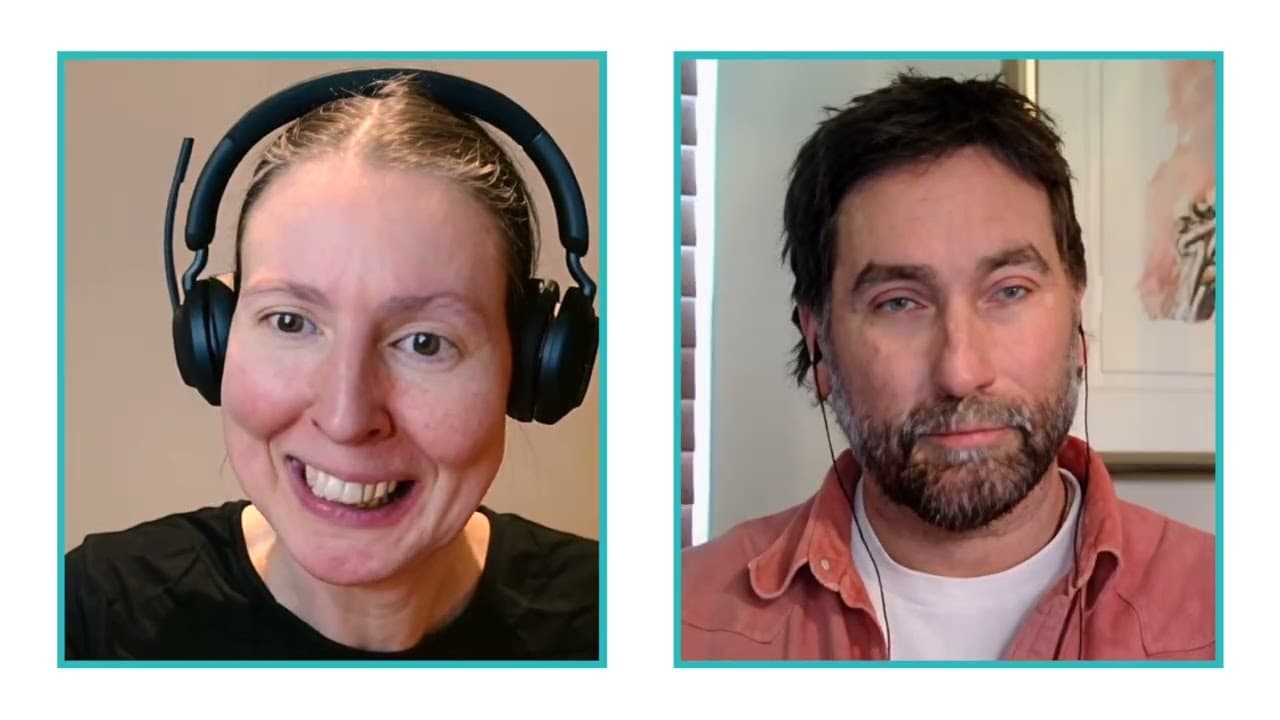
[00:00:00] Zoe Cunningham: Hello and welcome to The Digital Lighthouse, where we get inspiration from tech leaders to help us navigate the exciting and ever evolving world of digital transformation.
[00:00:11] I’m Zoe Cunningham.
[00:00:12] We believe that meaningful conversations can illuminate the path forward, helping us harness the power of technology for innovation, scalability, and sustainability.
[00:00:24] In this episode, I’m delighted to introduce Paul Spiers. Paul is the founder of The New P&L Institute and the host of the associated New P&L podcast, where he interviews entrepreneurs and leaders to glean insights and understand how we can work together to build more productive, collaborative, creative, and ultimately successful businesses.
[00:00:46] Paul’s engaging keynotes and workshops aim to help senior leaders, employees, and companies better prepare for the more complex future of work by advising on how they can transform and align their leadership, vision, strategy, and culture to elevate business performance.
[00:01:01] In this episode, we’ll be diving into what Paul means when he talks about the new P&L and how leaders can use the five foundations and other techniques to lead with purpose, to achieve increased impact, all while working at speed in an increasingly complex technological landscape. So Paul, welcome to The Digital Lighthouse.
[00:01:22] Paul Spiers: Thank you so much, Zoe. Thank you for having me.
[00:01:24] Zoe Cunningham: Can we start, maybe can you tell me a bit about your background and how you came to be working in leadership?
[00:01:30] Paul Spiers: Yeah, so had a mixed background, I’ve worked, run many of my own businesses as an entrepreneur and I’ve also worked in senior leadership positions in marketing and reputation management agencies, brand agencies and that sort of thing.
[00:01:43] I had my own agency in the late 2000 and tens, and we were subjected at that time to a series of very unethical actions that sort of took the agency to its knees and my personal life as well. And that’s where the idea for the New P&L came from really, that I felt that there had to be a better way of doing business and what we had been subjected to at that time and new P&L based on principles and leadership rather than just profit and loss.
[00:02:09] Zoe Cunningham: So explain to me a bit more about, what you mean when you say the new P&L. Is it simply just saying, we need to be talking about principles and leadership before profit and loss, or is there more to it than that?
[00:02:23] Paul Spiers: I believe the new P&L should have a positive impact on the traditional P&L.
[00:02:27] I think if you get your purpose and your principles right and you have leaders who lead with more principle and they lead more purpose led businesses and they coalesce their employees around a vision that is greater than their own self-interest, we understand where we are in the world, the impact that we’re trying to make. I believe that can only have a positive impact on the traditional P&L, profit from a, traditional P&L’s perspective.
[00:02:52] The focus of the new P&L is to look at those foundations of culture and leadership, to understand where there is misalignment, as you alluded to in your introduction, and understand how we can better bring a coherent vision to that organisation. How we can develop leaders that model the right sort of values and the right sort of behaviours and how we can encourage that across the culture as well.
[00:03:15] Zoe Cunningham: Okay, cool. So you are, not saying it’s one or the other. You’re not saying no, forget that P&L I’ve got a new P&L you are saying in order to achieve, profit, which, is the ultimate, driving force of business, that if we look at principles and leadership first, that’s what we’ll get there.
[00:03:34] Paul Spiers: Absolutely. I’m… businesses have to make profit, if they don’t make profit, we don’t have employees, we don’t have products and services and all those other things that make the world go round. Profit’s not a bad word. It’s not a dirty word. It’s how you earn it and what you do with it when you do.
[00:03:48] And my belief is that if you get the new P&L right, those principles and leadership, then the P of the old P&L should be in profit rather than in loss.
[00:03:57] Zoe Cunningham: Yeah, exactly. Tell me a bit more about the frameworks that you’ve developed that help leaders to start thinking about their leadership in this way.
[00:04:11] Paul Spiers: I think there are to transform an organization, to deliver what I call champions of change within that organization, particularly in the era of AI. When the speed, the scale, the size, the multiplicity of the challenges and opportunities we face are so extreme. I think there are five key elements, foundational pillars, if you like, to the new P&L.
[00:04:31] The first is self-aware leadership or greater self-awareness within leaders. I think everything has to start with greater self-awareness with leaders who are prepared to focus in more moments on the impact of their words and their actions upon others on the, alignment of their values, their words, and their actions.
[00:04:50] I think without that sort of understanding of where we are in the world from a leadership perspective and from an individual perspective, I don’t think any of the other five pillars can stand because you, have to start with self-awareness and, leadership in organizations. The second pillar is principle purpose, so having purpose and having a clear understanding of what that purpose is right at the heart of an organization.
[00:05:12] When you get it right, it’s one of the strongest strategic assets that a leader has at their disposal. ‘Cause when they’re having to make those difficult decisions in business, whether they’re positive, or their negative, difficult decisions. You can turn back to your purpose and see whether that decision you’re about to make in front of you is in line with the core desire, impact, vision for that business.
[00:05:34] The third is a culture of curiosity. And I think that’s even more critical in an age of AI than ever before. Getting back to the essence of who we are as curious human beings, and drawing that red thread and making that explicit red thread between curiosity, which is what nurtures creative and critical thinking, which is what leads to innovation. We don’t nurture that curiosity, we don’t innovate over the long term.
[00:05:59] Fourth is a transformational ecosystem, how we build a sort of ecosystem around these other principles based on trust, clear communication, collaboration, and hope.
[00:06:09] And then the fifth is the building of a powerful legacy. How we ensure that when it’s our turn in the sun and our role and our job and our industry and our organisation, that we leave that organisation in a better place than we found it.
[00:06:21] So self-aware leadership, principle purpose, culture of curiosity, transformational ecosystem, and a powerful legacy.
[00:06:28] Zoe Cunningham: I find it always very interesting once we start talking about, because essentially life is complex, right? And humans are complex and a lot of, I really liked what you said there that a lot of the time what we’re trying to do is not create some new way for humans to be, or some new improved version of humans, but actually to be like, what is it to be human?
[00:06:50] Paul Spiers: Exactly.
[00:06:50] Zoe Cunningham: And how do we capitalise on that? On the fact we are human to deliver for our businesses.
[00:06:57] So obviously all frameworks are just a way of trying to order this information and put it into ways that we can understand it. So do you think within your five pillars, there are some that are more important than others?
[00:07:10] Or is it that they all support each other? And also are they, because I noticed that some of them like saying you need to start with self-aware leadership and then obviously legacy perhaps comes at the end. Or is it not that simple that you can do them one at a time?
[00:07:25] Paul Spiers: No, I, think they are all important. If you’ve got a foundation and you take away one of the pillars, then the foundation is weaker by definition. But I do think you have to start with self-awareness and leadership, because I think that’s… without having that awareness of where you are and what your strengths are and what some of those weaknesses are as well, those inherent things that we all have in our individual character, I don’t think you can authentically commit to those other four principles because you’re starting from the wrong place.
[00:07:56] As a really basic example, when we think about inspirational leaders for argument’s sake, and most people in a leadership position would like to think they’re inspirational at some level. But if you think about those great inspirational leaders that we know out there in the world, that might be political, social, whatever it happens to be, what binds all of those inspirational leaders together is that they recognize that it is the alignment of their words, their values, and their actions that deliver inspiration.
[00:08:26] So inspiration, you can’t give. It can only be perceived. So if you set out to be the inspirational leader, you’re not self-aware enough and you think I’m gonna be an inspiring leader, you’re starting from the wrong place.
[00:08:37] But if you start with a desire to align your words, your actions, and your values and you live by those, then that inspiration is perceived. So you can’t give inspiration. It can only be perceived by the receiver.
[00:08:50] Zoe Cunningham: What I really there is how you’ve described a very holistic way to be a leader, and I think that one of the challenges is, I’m speaking from my own experience as well, like when you are in the thick of it and there’s so many things to be done, that the kind of precious little time you have to spend thinking about the future and reflecting on yourself and reflecting on how you can be better, you are always looking for something that you can implement really quickly, in the little gaps that you have.
[00:09:24] And actually what you’ve just described is how, as human beings, we perceive so much more deeply than that, right?
[00:09:30] Paul Spiers: Yes.
[00:09:31] Zoe Cunningham: That saying the right words is not enough, if your actions don’t…
[00:09:37] Paul Spiers: Exactly.
[00:09:38] Zoe Cunningham: Don’t follow through on that. Because that’s not the message that people will take away.
[00:09:45] Paul Spiers: Absolutely, and I think it’s, you are absolutely right that it’s, whether it’s this framework or another framework, it’s very easy to propose something, it’s much harder when you’re, as you suggested, when you’re in the thick of it, to be able to deliver on that.
[00:09:59] But I think we need to break it down. It’s inspiration in increments.
[00:10:03] So how do you exercise that muscle every day? How do you demonstrate and, the more you exercise that self-awareness muscle, in the same way as curiosity, creativity, and analytical thinking, the more you exercise it, the more alert you become, the more alert you become in that moment, the more aware you become.
[00:10:20] You don’t go from a reasonably decent runner to a world champion sprinter in a week. They exercise, they train. And the same principle applies to self-awareness and all of those other things.
[00:10:31] There’s a phrase I use in a lot of the workshops that I do, and it’s… do it, do it now, do it consistently, and do it well.
[00:10:38] So those four dos. So whatever you are thinking of doing, do it. Start right now, however small it might be, however pilot it might be, but then critically do it consistently. Build your own framework to do it consistently, and then do it well. What does success look like? What? What are the KPIs? How are you gonna measure it?
[00:10:57] What? What do the milestones look like? What does good look like for you in this particular initiative?
[00:11:03] Zoe Cunningham: Yeah. Brilliant. And I have to say, one of the things I found really helpful is to break everything down as small as possible. what’s the smallest amount I can do?
[00:11:11] Paul Spiers: Exactly. Yeah.
[00:11:12] Zoe Cunningham: And like you say, doing a little bit daily is so much more valuable than doing a lot in one go and then never again.
[00:11:20] Paul Spiers: We make a lot of this stuff too complex. It’s not rocket science, it’s human nature. And all of these things that we talk about in a professional sense are only a reflection of the same things we need to be doing in our personal lives. You wanna learn the guitar? You don’t learn it playing it once a fortnight. You learn it playing every other day and getting the calluses on your fingers and continuing to practice and making mistakes and learning again.
[00:11:44] The same principle applies in business. We’re not one person or one character or one type of human in work and another out. It’s just the same sort of thing. Starting it, doing something, doing it small, committing to it, and understanding what the end game looks like.
[00:11:58] Zoe Cunningham: Yeah. I want… I could talk just about these pillars, for a whole podcast, I think. But just moving on, because there’s something you’ve already mentioned that’s really important, which is, how fast everything is developing nowadays.
[00:12:13] And we’re trying to churn through improving technology, building new technology at this kind of breakneck speed. What are the risks of ploughing ahead of that without, at the same time delivering on kind of cultural cohesion?
[00:12:31] Paul Spiers: When I do my keynotes, there’s a sort of a holy trinity, if you like, of culture, leadership, and technology, and any digital transformation that occurs within an organisation will be limited in its success or indeed fail if you don’t have those three in alignment.
[00:12:47] And so much of that relies on context. And lemme give you an example of AI. Context is a really undervalued asset in business. So if you as a leader are investing in AI in your organization or whatever digital transformation it has to be, and you stand up in an all hands meeting and you say, we’re bringing in these tools, we’re gonna transform the organization, it’s gonna be much more productive and much more efficient.
[00:13:11] That is true to a point. But if you are speaking without any context to employees who, when they walk out of those four walls, all they hear is in the media, is AI’s coming for your job. Universal basic income, no one’s gonna have their jobs in the future. AI won’t take your job, but someone who knows AI will take your job. And all those other cliches that we keep hearing.
[00:13:32] If we are not contextualizing the investment in AI within our organization. Then as leaders, we’re tone deaf to the narrative that sits outside the four walls. So I think it’s about demonstrating the productivity and efficiency sure, and what it’s gonna do for the business.
[00:13:49] But then it’s also recognizing the context that sits around it. And how do we ensure that we acknowledge that, that we demonstrate how AI will also empower people. You know how it will, ensure that we can be more creative. We can take on some tasks that we didn’t, or whatever it happens to be that we couldn’t before.
[00:14:06] How will it enhance us? How will it empower us? How will it excite us? And how will it engage us? Just building that context in the conversation changes the way people perceive it, and leaders don’t become tone deaf as a result.
[00:14:19] Zoe Cunningham: And that actually brings me onto one of my questions that I wanted to ask because I think that this kind of like value led work is really important.
[00:14:31] And I’ve seen so many organizations get it wrong. And I think with values there’s this kind of challenge that a lot of our fundamental values really can be values that apply across the whole human race. So one of our Softwire values is kindness.
[00:14:48] Paul Spiers: Yes.
[00:14:48] Zoe Cunningham: And actually, who wants to stand up and say, my value isn’t, my value’s being mean to people.
[00:14:54] Paul Spiers: Yeah.
[00:14:54] Zoe Cunningham: So I think there’s this challenge between like, how do you make something specific enough or broad enough to be inclusive of a team of people who will all be different with different skills and different roles, and narrow enough to be meaningful to an organization.
[00:15:13] Paul Spiers: So for me personally, and everyone’s gonna have a different view on this, but for me it’s less about the words we use, and to coming back to the earlier point I made, more about the actions I take.
[00:15:24] So I think about vinyl values, what I call ‘vinyl values’. And what I mean by that is you walk into an office and behind the reception or in the boardroom you have all of those words: integrity, trust, kindness, and whatever other values they’ve decided on this year. I call them vinyl values, it’s because in some organizations they are a demonstration of, but in a lot of organizations they become a substitute for rather than the demonstration of the values that exist.
[00:15:51] So the commitment to them is about as thin as the vinyl they’re printed on, hence the term vinyl values. So the big challenge for us as organizations and leaders. It doesn’t matter what those values are so much, but how are we demonstrating them at, what does it look like at 11 o’clock on a Tuesday morning? Where do you see trust in that organization? What are the practical frameworks and mechanisms that enable people to trust each other?
[00:16:16] It’s starting at the bottom and understanding how we build it up. Rather than declaring the values at the top and trying to push them down. What does it look like foundationally, again, to have those values in the organization? What are the mechanisms to ensure that they’re embedded in the organization? What are the mechanisms to ensure they continue to flourish? Because an organization is organic, it grows. People come and go. So the next people that come on board, how are they embedded and imbued in those values, what does it mean to them?
[00:16:46] And involving that organization, the employees, in deciding what those values are and helping to build the mechanisms and the frameworks that enable them to be delivered. Goes back to the point again, do it now, do it consistently, and do it well. What does consistently look like in terms of applying those values in the organization and leaders have a real responsibility to role model ’em.
[00:17:09] You can’t talk about integrity and trust and then just cross your fingers and hope that’s the way the culture will turn out. You’ve gotta deliver it and role model it as a leader.
[00:17:18] Zoe Cunningham: Yeah. A sticker on the wall isn’t gonna cut it.
[00:17:20] Paul Spiers: No, that’s right. That’s right.
[00:17:22] Zoe Cunningham: Let’s just touch briefly. ‘Cause I, know this is an area that you are involved in, another area where sometimes corporations don’t live up to what they’re promising. And that’s the, kind of area of entrepreneurship.
[00:17:37] So I think that there’s so many larger organizations looking at startups who are nimble and creative, and sometimes creating these business propositions that bring down these giants.
[00:17:51] And it’s obviously a business imperative to be able to replicate that within a corporate environment. And yet so many people find it so challenging. So how can, you, implement it for real rather than just have the rhetoric around it?
[00:18:09] Paul Spiers: So if you look at the World Economic Forum, the Future of Jobs report over the last five or six years. Even in a world of massive digital transformation, the four of the five key characteristics that employers want from employees: analytical thinking, critical thinking, creative thinking, curiosity and lifelong learning.
[00:18:28] So that’s what they want, but then we don’t create the environment that’s allow the space, give the breathing space to enable these things to happen within an organization.
[00:18:37] So yeah, the biggest thing you can do, again to my earlier point, is role model it as a leader. Start by listening. Start by asking questions. Start by demonstrating that actually leaders and no one else in that organization has all the answers. So engage your team asking questions around innovation and how we grow the business and how we develop new products and services.
[00:18:59] There’s a really basic example that I can give. It’s a really practical example that is about as small as you can get, but I’ve seen it work phenomenally well for a lot of organizations that I’ve worked with.
[00:19:11] So when we take a brief for any external proposition within an organization, it might be a new product or a service or a campaign for marketing agency, whatever it happens to be.
[00:19:21] Someone’s responsible for reading that brief. You bring a group of people together for a brainstorm. You look at that brief. You come up with 15 or 20 ideas around that table of five or seven people, you agree on the two ideas you’re gonna take forward over that two hours, you assign the responsibilities, you pat each other on the back, get excited about those ideas, and you walk out the door.
[00:19:43] At that point, what every organization does, if they don’t have a process to encourage entrepreneurship and innovation and creative thinking. They’ve walked out with two or three ideas, but they’ve closed the door literally and figuratively on the 17 ideas that still exist in that room. But just because they weren’t right for right now does not mean they’re not right forever.
[00:20:05] Because markets change. New briefs come in, people look at them with fresh eyes. All sorts of situations change over the ensuing months. So even a simple process of curating the ideas that weren’t right for right now, but might be right for some point in the future. I’ve seen that transform the way organizations build their thinking and their entrepreneurship and their creative thinking and innovation.
[00:20:28] And sometimes even at a basic level, they might just bring some of those ideas back together as starters to get the next conversation going. They might not ever could turn into to innovation or ideas. But just curating those ideas that people were open enough to put forward, that were excited enough to put forward, that may or not have been right for right now, but that doesn’t mean they’re not the genesis, the lump of clay of a wonderful idea for something else in the future.
[00:20:58] Just so many ideas leak out of an organization because we just go with the ones we’ve chosen, not with the ones that were maybe a bit ugly for that moment.
[00:21:08] Zoe Cunningham: And also showing that they’re valuable.
[00:21:10] Paul Spiers: Absolutely.
[00:21:10] Zoe Cunningham: Sometimes you can even take the idea that someone was excited about and then have so many people modify it that no one’s excited about the idea that’s left at the end.
[00:21:21] And I, was really struck by something you said earlier about, we are all curious beings.
[00:21:26] Paul Spiers: Yes.
[00:21:27] Zoe Cunningham: I’m a big user of my Headspace meditation app every day, and so one of the messages I’m constantly receiving is, sometimes you have to allow things. Sometimes it’s not about creating things. We’re always trying to create more and learn more and do more, and sometimes actually things are in our nature and we just need to allow.
[00:21:47] Paul Spiers: That’s right.
[00:21:47] Zoe Cunningham: Allow them to come through and actually we have all these creative, curious people and we’re not allowing them to do that within the environment in whatever way.
[00:22:00] Paul Spiers: I think it’s also, it’s an individual responsibility to be more intentionally curious as well. So we, have in our hands, these mobile phones, we have in our hands the greatest curator of ideas in the history of humankind. Never, before have we had something that, I’m old enough. I’m in my mid fifties. So you wanted to keep capture an idea in the eighties, you had to carry a bag with a camera and a notepad and everything else. Everything’s in this.
[00:22:28] But we have a paradox with it where we can either use it to swipe and wipe and stare and don’t care, or we can use it to intentionally capture our curiosity, and that’s our individual responsibility. We see something, we snap it, we record it, we whatever it happens to be, make a note of it and then revisit it.
[00:22:46] Look at those ideas every week or every other week in relation to the challenges and the opportunities we have in front of us. The world is full of answers if we’re prepared to look up rather than down, and out rather than in, and be a bit more intentional about what we are looking at and why we are looking at it and what it could be for us.
[00:23:05] Zoe Cunningham: And maybe curate everything… again, back to like how human beings work. I was very taken because it was so alien to me, and I would’ve argued so, so firmly against it. But, when we first started putting our, our cards for our development stories on the wall for our tasks, so it was visible on the wall, and actually we forget that you can digitize something where it’s functionally the same informationally, but it’s not in terms of how we interact with it as a human being. Yes. So even how we keep our ideas or how we choose to store them or frame them or portray them is gonna make a difference as well.
[00:23:50]
[00:23:50] Paul Spiers: Absolutely. And I think… we, again, there’s a, bit of inherent paradox at the heart of lots of what we do today because so many apps and, technology is quite rightly tasked with removing the friction in a process. So let’s think about a food delivery app or whatever and getting an, ordering something from the other side of town and two clicks, it can be in your house in 20 minutes for argument’s sake. That removes a whole lot of friction.
[00:24:18] But there’s also creativity in the friction for us individually. We come up with our best creative ideas when we’re up against it, when there is a challenge in front of us. And the irony is all of those apps and all of that technology has come through finding creativity in a existing friction that existed at that point, and then we’ve solved that problem.
[00:24:38] So if we just passively accept everything and we look for a frictionless environment and world. We lose a little bit of ourselves, we lose that creativity. We lose the challenge in the moment of having friction in front of us and trying to find a better way through it. We can’t lose that just because we want something a bit easier and a bit quicker.
[00:25:01] Zoe Cunningham: I could discuss this all day. But sadly we’re running out of time. You do have a book coming out shortly though, so how can people get their hands on that if or any other ways to find out more about your ideas and The New P&L?
[00:25:16] Paul Spiers: So the book is a bit delayed because my editor has far more red ink in their pen than I anticipated. I’ve got a little bit longer to go with that. That’ll be mid, early to mid 2026.
[00:25:27] But in the meantime, you can find me on LinkedIn, Paul Spiers, S-P-I-E-R-S, or PrinciplesAndLeadership.com. So principlesandleadership.com, that’s the website. But connect with me on LinkedIn. I’m really happy to, to engage with anyone there as well.
[00:25:44] Zoe Cunningham: Thank you so much Paul, for coming on and sharing these ideas with me today.
[00:25:49] Paul Spiers: It’s been a real pleasure and thank you for the invitation zoe. Thank you.
[00:25:51] Zoe Cunningham: This Digital Lighthouse episode was edited by Steve Folland and produced by Patrick Anderson. The theme music was written and recorded by Ben Baylow.
[00:25:59] A huge thanks to our sponsor Softwire for their continuing support from the inception of the show in 2019 to the present day. If you love the podcast, please let us know with a rating and review on your platform of choice. We are always looking for feedback to ensure we’re making the best show possible.
[00:26:15] And if you’d like to take part, please drop us a line at TheDigitalLighthouse@softwire.com.
[00:26:21] You’ve been listening to The Digital Lighthouse with me Zoe Cunningham. Thank you for sharing your precious time with us today and stay safe on this wild technological ride that we are all on.